
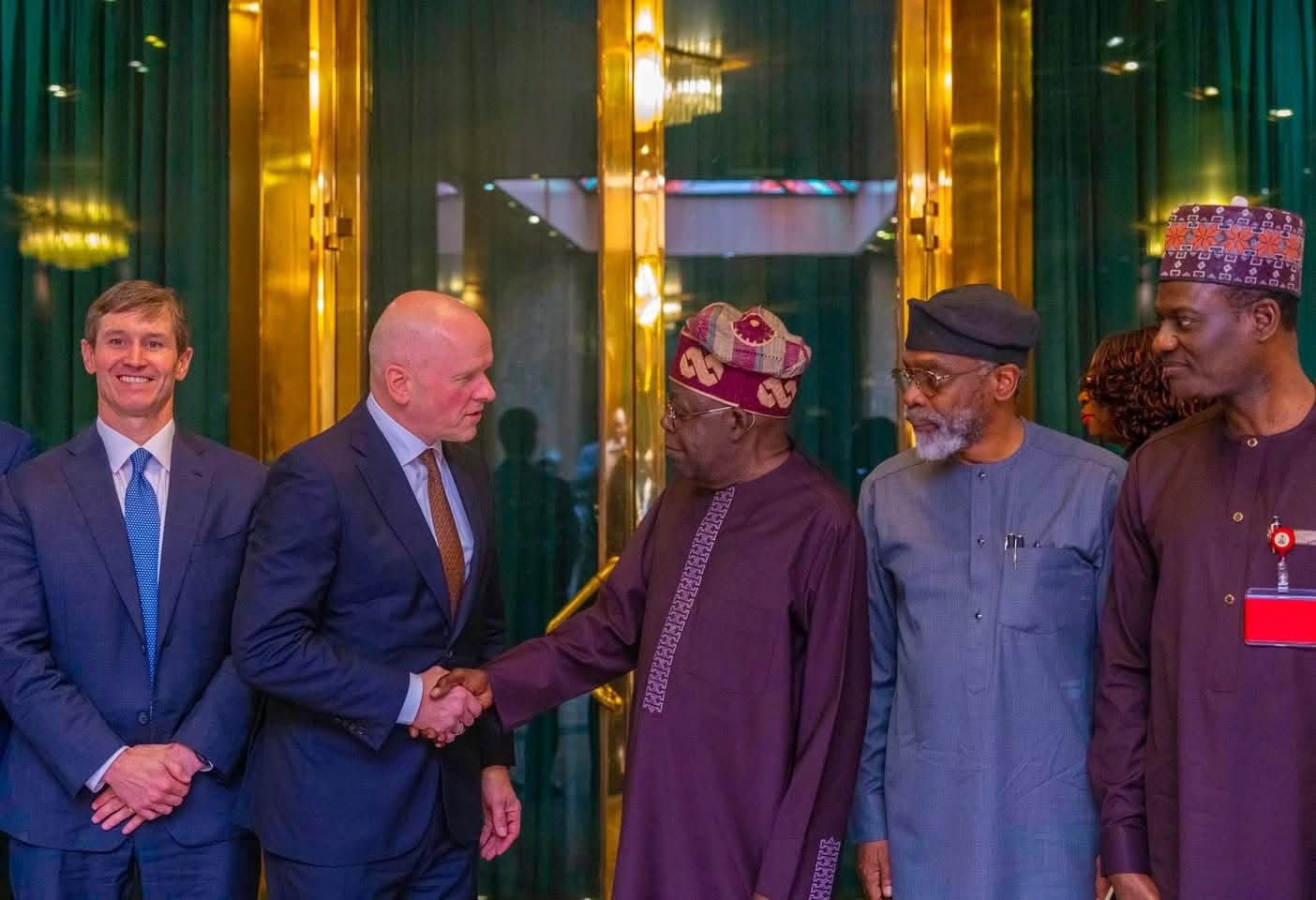
Tinubu: Nigerian Youths Tech-Savvy, Ready to Lead Global Digital Economy
President Bola Ahmed Tinubu has reaffirmed that Nigeria’s youthful population remains the country’s greatest asset, assuring global investors that Nigerian youths possess the skills and adaptability needed to compete in the digital economy.
Speaking on Tuesday while receiving a delegation of Mastercard led by its Global Chief Executive Officer, Michael Miebach, at the State House in Abuja, the President welcomed the company’s plan to train five million businesses and equip them with digital skills.
Tinubu said his administration’s economic reforms have repositioned and stabilised the economy, creating an enabling environment for investments while empowering young people and small businesses with digital tools.
He noted that the ongoing formalisation of Nigeria’s informal business sector would unlock more opportunities for digital transformation, investment, job creation and economic growth.
“The most important asset is our youth,” the President said, stressing that the government would continue supporting initiatives that enhance digital inclusion and payment systems for Micro, Small and Medium Enterprises (MSMEs).
He also urged Mastercard to deepen its partnership with the Bank of Industry, noting that the institution maintains a comprehensive database of small businesses that could benefit from expanded digital payment platforms and financial services.
Minister of Finance and Coordinating Minister of the Economy, Wale Edun, represented at the meeting by Chairman of the Presidential Fiscal Policy and Tax Reforms Committee, Taiwo Oyedele, said the administration’s reforms are accelerating the integration of Nigeria’s informal sector into the formal economy.
According to Oyedele, over 10,000 informal businesses have applied for registration daily in recent months, creating significant opportunities in credit systems, digital payments and financial inclusion.
He added that Nigeria hosts five of Africa’s nine fintech unicorns and is building a stronger digital economy through reforms in consumer credit, mortgages, student loans and small-business financing.
Mastercard CEO Michael Miebach pledged the company’s support for Nigeria’s economic agenda, describing the country as a key driver of growth in Africa.
Miebach revealed that Mastercard currently helps prevent about $200 million in fraud annually and facilitates roughly $2 billion in foreign exchange inflows into Nigeria while partnering with local banks and supporting SMEs.
He said the company aims to unlock the potential of Nigeria’s estimated 40 million small businesses by providing digital skills, cybersecurity awareness and access to global markets.
According to him, Mastercard has developed a three-year programme that combines technical workshops with practical support to help small businesses safely transition into the digital economy.
The company also plans to invest in digital inclusion, cybersecurity resilience and a Cyber Centre of Excellence focused on threat intelligence, artificial intelligence risks and incident response, reinforcing its long-term commitment to Nigeria’s digital transformation.