Yabo-Shagari Power Project: Rep Yabo, Maitafsir Make Separate Claims Over Rehabilitation
By Fahad Faruk Galadanchi
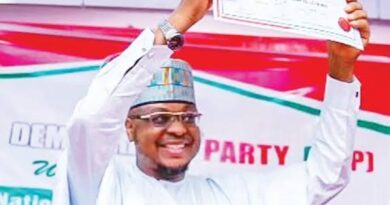
The prolonged electricity crisis in Yabo and Shagari Local Government Areas of Sokoto State has taken a new turn, with APC candidate for the Yabo/Shagari Federal Constituency in the 2027 general elections, Prof. Musa Garba Maitafsir, announcing the commencement of rehabilitation work on the Sifawa-Shagari-Yabo power line, while the constituency’s representative in the House of Representatives, Hon. Umar Yusuf Yabo, says he had already taken steps to address the problem before the latest intervention.
The two local government areas have experienced prolonged power outages following the vandalisation and subsequent deterioration of electricity infrastructure serving several communities.
At a flag off ceremony, Maitafsir said he had commenced the rehabilitation to alleviate the hardship caused by the prolonged blackout.
He said he had paid N150 million as an advance to the contracting firm handling the project, adding that the company had pledged to complete the rehabilitation in less than one month.
“We have suffered for too long due to the dearth of electricity after the power line was vandalised. I have already paid N150 million to the contracting company and I will logically complete the project at whatever cost” Maitafsir said.
He appealed to residents to protect the infrastructure from future vandalism, stressing the importance of electricity to the socio- economic development of the affected communities.
However, Rep. Umar Yusuf Yabo has presented a separate account of efforts to restore electricity in the constituency.
Speaking in a viral clip shared on his official Facebook account, Yabo said restoring electricity had been one of his priorities since he assumed office as the federal lawmaker representing the constituency.
According to him, an earlier attempt to restore power after several years of blackout lasted for two months before the system broke down again.
Yabo said he was involved in efforts to facilitate that intervention and subsequently waited for relevant authorities to initiate another lasting solution.
He said that after waiting without seeing concrete action, he procured equipment and engaged engineers to inspect the affected infrastructure and prepare for rehabilitation.
“Just as we were about to commence the rehabilitation, we received information that the Sokoto State Government had decided to undertake the repair. The government even sent engineers to inspect the affected facilities” he explained
The lawmaker said he welcomed the government’s decision to take over the rehabilitation, adding that residents could attest to his efforts through the National Assembly to draw attention to the electricity crisis.
Yabo said the equipment he had procured would not be abandoned, explaining that it would instead be deployed to extend electricity supply to communities and villages that remain without access to electricity after the main rehabilitation is completed.
He also appealed to the Sokoto State Government to complete road projects in the constituency, particularly the Sanyinnawal village road and Baware road.
“We are also appealing to the government to come in and complete the Sanyinnawal road project which we started, as well as the Baware road project, which is yet to be completed ” he appealed
Yabo said he would welcome government intervention in completing the projects but would consider returning to complete them if necessary.
On the electricity rehabilitation, the lawmaker said the state government had assured stakeholders that the work would not take a long time.
He added that if the rehabilitation failed to meet the promised timeframe he would resume his intervention to ensure that the electricity crisis was addressed.
The competing accounts have placed renewed attention on the prolonged electricity challenge in Yabo and Shagari, but the immediate concern for residents remains the completion of the rehabilitation and the restoration of reliable electricity.
For communities that have endured years of unstable or absent power supply, the significance of the project will ultimately be measured by whether electricity is restored sustainably whether the infrastructure is protected from further vandalism and whether communities that remain unconnected are subsequently provided access.
The restoration of power is expected to support businesses such as welding, tailoring, cold room operations, grinding mills and ICT centres, many of which have struggled because of the prolonged blackout.
Health facilities are also expected to benefit from improved electricity supply for the preservation of vaccines and medicines and the operation of essential equipment, while schools could have better access to computers, laboratories and other electricity dependent facilities.
Electricity could equally improve water supply through powered boreholes, enhance security through street lighting and support agricultural processing and preservation.
With both the ongoing rehabilitation and the lawmaker’s stated plans for further intervention now in focus, residents are awaiting the completion of the work and the return of stable electricity to their communities.