Tinubu Urges African Unity to End Export of Raw Minerals, Boost Local Value Addition
By Nafiu Muhammad Lema
President Bola Ahmed Tinubu has called for stronger cooperation among African countries to end the export of raw mineral resources and accelerate local processing, manufacturing and value addition across the continent.
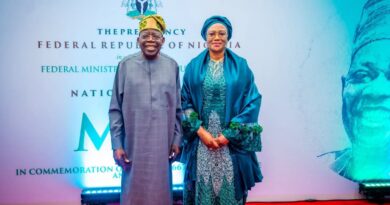
Tinubu made the call on Monday in New York, United States, while declaring open the 3rd Africa Minerals Strategy Group (AMSG) High-Level Roundtable on Critical Minerals Development in Africa, held on the sidelines of the 81st Session of the United Nations General Assembly.
The roundtable, chaired by President Tinubu, was attended by Vice President Kashim Shettima, Chairman of the AMSG and Minister of Solid Minerals Development, Dele Alake, as well as representatives of several African governments and other stakeholders.
In an address delivered by Vice President Shettima, Tinubu said Africa must move beyond being a supplier of raw materials and develop the capacity to process its mineral resources into finished products.
The President said mineral-rich communities should benefit through jobs, infrastructure, technology transfer, local enterprise participation and improved livelihoods.
He identified cobalt, copper, lithium and rare earth elements as strategic resources whose importance is increasing due to global demand for clean energy, artificial intelligence and advanced manufacturing.
According to him, Africa’s mineral wealth should be measured not only by extraction and revenue but by the jobs, industries, infrastructure and prosperity it creates for present and future generations.
Tinubu warned that African countries could weaken their collective bargaining power by competing against one another through lower royalties, weaker local-content requirements and excessive concessions.
He therefore advocated greater continental cooperation to create larger markets, integrated industries, stronger financing mechanisms and a united negotiating position.
The President also highlighted reforms in Nigeria’s mining sector, including plans to require local value addition for new mining licences, strengthen geological data and investor access, organise artisanal miners into cooperatives, combat illegal mining and improve regulatory accountability.
He said revenue from the mining sector increased from approximately ₦6 billion in 2023 to more than ₦38 billion in 2024, and between ₦68.1 billion and ₦70 billion in 2025.
Tinubu also pointed to foreign investment commitments and the development of large-scale lithium processing capacity in Nasarawa State as evidence of the potential of Nigeria’s mineral sector.
He called on African countries to pursue partnerships based on mutual benefit, shared responsibility, sovereign equality and respect for national priorities, while seeking fair market access, industrial investment and technology partnerships.
The President further urged members of the AMSG to speak with one voice in promoting Africa’s collective interests.
On the Continental Integration and Economic Assurance Declaration (CIEAD) adopted at the roundtable, Tinubu said it should provide a predictable and investment-ready framework for Africa’s strategic mineral corridors, harmonised policies, responsible investment and shared infrastructure.
He urged that the declaration should be backed by clear timelines, financing arrangements, implementation mechanisms and public accountability.
Earlier, Alake said the CIEAD was being proposed as a continental framework for establishing a unified architecture for Africa’s critical and solid minerals value chains.
He urged African countries that have yet to join the AMSG to become members, stressing the need for greater synergy in efforts, ideas and resources for the development of the continent’s natural resources.
Kenya’s Minister of Blue Economy and Maritime Affairs, Hassan Ali Joho, also called for greater domestic resource mobilisation, transparency and competitiveness, alongside improved alignment of licensing procedures while respecting the sovereignty of member states.
Representatives from Liberia, Chad, Tanzania and other stakeholders also contributed to discussions at the roundtable.