Atiku Asks Tinubu to Raise Minimum Wage
By Nafiu Muhammad Lema
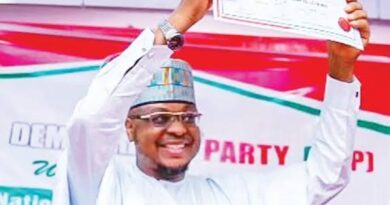
Presidential candidate of the African Democratic Congress (ADC), Atiku Abubakar, has called on President Bola Ahmed Tinubu to urgently review Nigeria’s ₦70,000 national minimum wage, saying rising costs of food, transport, rent and energy have eroded workers’ purchasing power.
Atiku made the demand in a statement issued by Phrank Shaibu, Director of Strategic Communications of the ADC Presidential Campaign Council. He also backed organised labour’s call for a substantial increase in workers’ wages.
The former Vice President attributed the worsening cost-of-living pressures partly to the removal of petrol subsidy, arguing that the increase in the minimum wage from ₦30,000 to ₦70,000 had not translated into a corresponding improvement in workers’ living standards.
According to Atiku, at a petrol price of ₦1,400 per litre, the current minimum wage can purchase about 50 litres of petrol, compared with roughly 118 litres that ₦30,000 could buy at the April 2023 national average petrol price of ₦254.06 per litre.
He said the rising cost of petrol had also affected transportation, food production and other household expenses, leaving many workers struggling to meet basic needs.
Atiku further compared Nigeria’s minimum wage with wages in some other African countries, citing figures which put the equivalent monthly minimum wages in Libya, Algeria, Equatorial Guinea and Gabon above Nigeria’s ₦70,000.
He urged the Federal Government to combine any wage increase with measures aimed at reducing the cost of essential goods and services.
The ADC candidate also challenged President Tinubu to give workers a clear position on the proposed wage review, saying employees should not be left waiting through prolonged negotiations without a definite outcome.
Atiku promised that, if elected in 2027, his administration would begin the process of raising the wage floor from its first day in office.
He also proposed a targeted production subsidy for petroleum products refined in Nigeria and sold domestically, subject to spending limits, public disclosure and independent auditing.
Atiku said his broader economic plan would focus on realistic wage adjustments, targeted social protection and measures to stabilise the prices of essential goods and energy.
The call comes amid renewed demands from organised labour for a review of the ₦70,000 minimum wage, with labour leaders arguing that the current rate no longer reflects prevailing economic conditions.