OPINION: WHAT IT TAKES TO BE A STATESMAN IN THIS TURBULENT TIMES
By Dr. Saleh Ibrahim
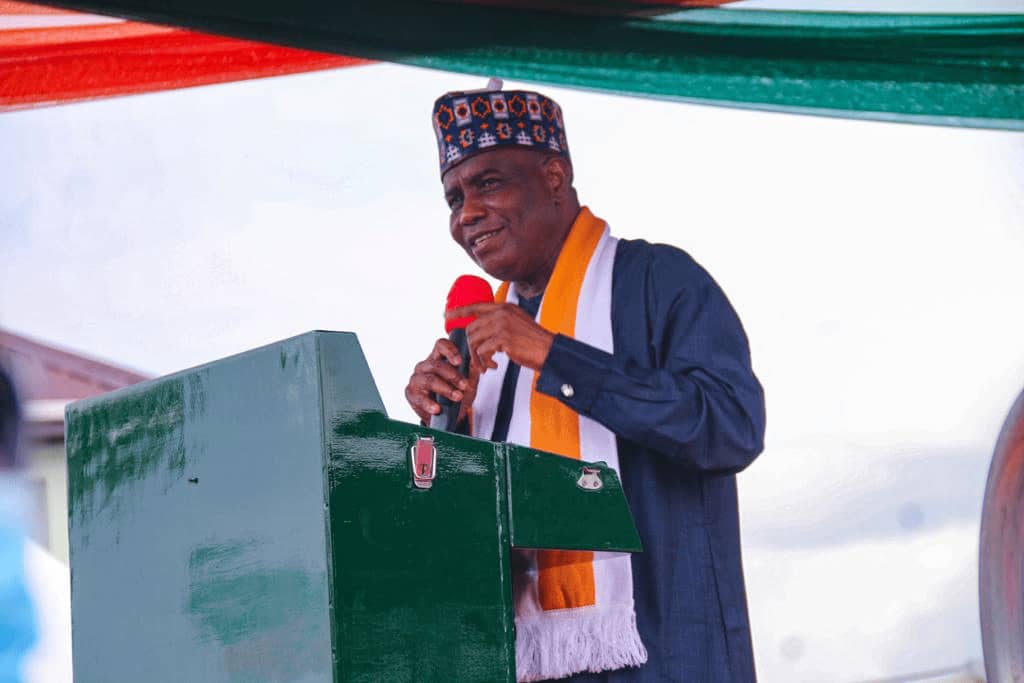
Nigeria does not lack speeches. It lacks the kind that move a nation from comfort to courage, from routine politics to purposeful action. That is why the recent interventions by Aminu Waziri Tambuwal and John Odigie-Oyegun have resonated beyond the halls in which they were delivered. They were not perfect speeches, but they carried something increasingly rare in our politics. A sense that the moment demands sacrifice, not slogans.
At a time when Nigeria feels stretched economically strained, socially fragmented, and politically tense the emergence of voices willing to speak of unity, restraint, and shared purpose offers a glimmer of possibility. Whether one agrees with every position of the African Democratic Congress or not is beside the point. What matters is the reintroduction of a language that has almost disappeared from public life: the language of statesmanship.
Statesmanship, unlike politics-as-usual, is not about immediate victory. It is about long-term stability. It demands that leaders and citizens accept that the future cannot be built on the easy choices of the present. Nigeria today stands in desperate need of that mindset.
The country’s current trajectory is troubling. Power is becoming increasingly centralised, dissent is often treated as disloyalty, and political competition risks being reduced to a zero-sum game. This is not merely a partisan concern; it is a structural one. Any system that appears to concentrate power without sufficient checks inevitably breeds suspicion, resistance, and instability. History both within and beyond Nigeria has shown that when political space narrows, tensions do not disappear; they intensify beneath the surface.
It would be simplistic, however, to frame Nigeria’s challenge as the failure of one party or the ambition of another. The truth is more uncomfortable: the country’s predicament is the cumulative result of choices made across administrations, across regions, and across generations. Blame may be politically useful, but it is not a strategy for recovery.
What, then, does change look like? And why must it involve sacrifice?
First, change requires political actors to rethink the meaning of power. Too often, leadership in Nigeria has been treated as entitlement rather than responsibility. Public office becomes a reward to be enjoyed rather than a trust to be honoured. This mindset fuels corruption, weakens institutions, and alienates citizens. Real change will require those in power to surrender some of the privileges that come with office whether in the form of excessive perks, opaque decision-making, or the manipulation of institutions for partisan ends.
Second, change demands that opposition politics evolve beyond mere resistance. Criticism is essential in any democracy, but it must be matched with credible alternatives. The speeches by Senator Aminu Waziri Tambuwal (Mutawallen Sokoto) and His Excellency John Adigie Oyegun hint at this possibility a politics that is not just against something, but for something. For unity. For institutional reform. For a more inclusive national vision. If that promise is to mean anything, it must translate into concrete proposals and consistent behaviour.
Third, and perhaps most importantly, change requires sacrifice from citizens themselves. It is easy to demand better governance; it is harder to practise the values that sustain it. Corruption, for instance, is not only a problem of high office it is embedded in everyday transactions. Electoral malpractice does not occur in a vacuum; it often involves the complicity of voters, local actors, and communities. A nation cannot outsource integrity to its leaders alone.
Sacrifice, in this context, does not necessarily mean suffering. It means restraint. It means choosing long-term gain over short-term advantage. It means rejecting the temptations of ethnic and religious division, even when they offer immediate political or social benefits. Nigeria’s diversity should be its strength, but it becomes a weakness when it is weaponised for narrow interests.
There is also an economic dimension to sacrifice. The reforms required to stabilise Nigeria’s economy, whether in subsidy regimes, taxation, or public spending are often painful. But the alternative to difficult reforms is prolonged instability. The challenge for leadership is to ensure that the burden of sacrifice is shared fairly, and that it leads to tangible improvements. Citizens are more likely to endure hardship when they believe it is purposeful and equitably distributed.
The danger Nigeria faces today is not simply that things are not working; it is that the belief in collective progress is eroding. When citizens lose faith in the system, they retreat into survival mode seeking security and opportunity wherever they can find it, often outside the formal structures of the state. This weakens national cohesion and makes reform even more difficult.
That is why moments like this matter. When figures from different political traditions begin to converge on the need for change, it creates an opening however small for a broader national conversation. But speeches, no matter how eloquent, are only the beginning. What follows them will determine whether they mark a turning point or merely another episode in Nigeria’s long history of missed opportunities.
The call for sacrifice must also be matched by example. Nigerians have grown weary of leaders who preach austerity while living in excess, who call for unity while practising division, who speak of reform while resisting accountability. Credibility is the currency of leadership, and it is earned through consistency between words and actions.
Nigeria’s history offers both caution and hope. It is a country that has endured civil war, military rule, and repeated economic shocks, yet it has also demonstrated resilience and an ability to reinvent itself. The question is whether it can do so again in a way that is more inclusive, more stable, and more just.
The answer will not come from one party, one region, or one generation. It will come from a collective willingness to prioritise the nation over narrower interests. That is the essence of sacrifice not the abandonment of self, but the recognition that individual success is ultimately tied to the success of the whole.
In the end, the message embedded in the recent speeches is simple but profound. Nigeria cannot continue as it is. Change is not optional; it is inevitable. The only question is whether it will be managed deliberately or forced by crisis. If it is to be managed, then everyone leaders and citizens alike, must be prepared to give something up. Comfort. Privilege. Certainty. Even, at times, political advantage.
Nations are not transformed by convenience. They are transformed by choice. And the choice before Nigeria now is whether to continue along a familiar but failing path, or to embrace the harder road of reform and renewal.
The time to decide is not tomorrow. It is now.
Dr Saleh is the CEO of Diversity and Inclusion NGO in Abuja.