Atiku’s Fuel Plan Is About Affordability, Not Old Subsidy Regime — Okonkwo
By Nafiu Muhammad Lema
Kenneth Okonkwo, spokesperson for the 2027 presidential campaign of former Vice-President Atiku Abubakar, has dismissed claims that the former vice-president plans to return Nigeria to the old petrol subsidy regime.
Okonkwo said Atiku’s proposed Atiku Fuel Affordability Plan (AFAP) is designed to reduce the cost of petrol for Nigerians rather than revive the subsidy system previously associated with fuel imports and alleged corruption.
He made the remarks while speaking on Channels Television’s Sunday Politics, in reaction to President Bola Tinubu’s criticism of Atiku’s proposal to restore petrol subsidy if elected president in 2027.
Atiku had recently said he would introduce a new subsidy arrangement, arguing that the Federal Government had failed to adequately account for the savings from the removal of petrol subsidy.
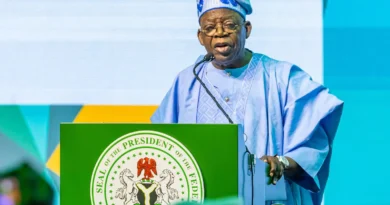
Tinubu subsequently described the proposal as evidence of “serious ignorance of governance and economy.”
But Okonkwo rejected the President’s assessment, saying Tinubu misunderstood the policy being proposed by Atiku.
According to him, the objective of the plan is to make petrol affordable by ensuring that local refineries have access to crude oil at a fair price, thereby reducing production costs.
«“The whole idea of the Atiku plan is affordability of fuel to the ordinary Nigerian,” Okonkwo said.»
He argued that the proposed policy was fundamentally different from the former subsidy regime, which he described as being heavily dependent on imported petrol and vulnerable to manipulation.
Okonkwo said the return of functional local refineries had created an opportunity for Nigeria to adopt a different approach by supplying crude oil to domestic refineries at prices that would enable them to produce affordable petrol.
He also accused the Tinubu administration of failing to provide adequate crude oil to the Dangote Refinery, arguing that dependence on imported crude had contributed to high production costs.
According to him, the current economic hardship is largely driven by high production costs rather than demand-pull inflation.
“What we are suffering today is not demand-pull inflation. It’s cost-of-production-induced inflation,” he said.
Okonkwo further maintained that Atiku would not return Nigeria to the subsidy arrangement of the past, which he alleged was characterised by inflated import figures and costs.
He said the proposed AFAP would instead seek to use Nigeria’s domestic refining capacity to bring down the price of petrol and ease the burden on consumers.
Okonkwo also criticised Tinubu over the controversy surrounding the Presidential Foreign Intervention Promotion Council (PFIPC), citing the episode as an example of what he described as the administration’s lack of awareness of activities within government.
He maintained that Atiku’s proposal should therefore be viewed as a new fuel affordability strategy rather than a return to the old subsidy system.