2027: Dasuki Warns Against Fake Ballots, Urges One-Day Election
By Nafiu Muhammad Lema
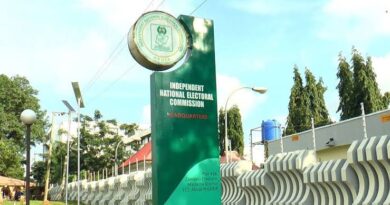
Deputy Minority Leader of the House of Representatives, Hon. Abdussamad Dasuki, has urged the Independent National Electoral Commission (INEC) to conduct the 2027 federal and state elections on a single day, saying the arrangement would reduce costs, security risks and disruption to economic activities.
Dasuki also called for the amendment of Section 63(2) of the Electoral Act, warning that the provision could create a loophole through which fake or unauthorised ballot papers might be counted during elections.
The lawmaker made the remarks at the weekend when youths of the African Democratic Congress (ADC) visited him to congratulate him on his emergence as Deputy Minority Leader of the House.
According to Dasuki, holding the presidential, National Assembly, governorship and State House of Assembly elections on the same day would save the country significant resources by reducing expenses on electoral officials, security personnel and other logistics.
He said the proposal was particularly important given the country’s financial constraints and the need to direct available resources towards issues that have a direct impact on citizens’ welfare.
Dasuki also argued that a single-day election would reduce the movement of voters, politicians, electoral officials and security personnel, especially amid the prevailing security challenges across the country.
“Considering the security situation in Nigeria, participants should not be required to make two separate journeys for elections when the process can be efficiently organised to take place on one day,” he said.
The Deputy Minority Leader urged INEC to consider holding the combined elections in either January or February 2027.
He noted that the exercise would involve five ballot papers for the presidential, senatorial, House of Representatives, governorship and State House of Assembly elections.
Dasuki, however, maintained that INEC could effectively manage the five ballot papers if adequate preparations were made ahead of the polls.
He further pointed out that the existence of eight off-cycle governorship elections would make the arrangement even easier, as voters in those states would only require four ballot papers during the 2027 elections.
Dasuki Raises Concern Over Section 63(2)
The lawmaker also raised concerns over Section 63(2) of the Electoral Act, which allows a ballot paper without the prescribed official mark to be counted if the returning officer is satisfied that it came from an authorised book of ballot papers supplied to the relevant polling unit.
Dasuki said the provision could undermine the credibility of the electoral process by creating room for counterfeit or unauthorised ballot papers to be introduced.
He drew attention to what he described as an apparent contradiction between subsections (1) and (2) of Section 63.
While Section 63(1) provides that a ballot paper without the official mark prescribed by INEC shall not be counted, subsection (2) creates an exception where the returning officer is satisfied that the ballot paper came from an authorised book supplied to the polling unit.
Dasuki warned that such an exception could make it difficult to distinguish genuine ballot papers from fake ones during the collation of results.
He therefore called for the removal of Section 63(2), assuring that minority leaders in the National Assembly were working towards correcting the provision before the 2027 elections.
Dasuki Commends Military Salary Increase
The lawmaker also commended the recent increase in the salaries of members of the Armed Forces, describing the decision as a positive step towards improving the welfare of military personnel.
He, however, urged the government to do more, particularly by addressing the accommodation needs of soldiers and other military personnel.
Dasuki called for decent accommodation to be provided for all military personnel, arguing that improved living conditions would boost their morale and effectiveness in carrying out their security responsibilities.
He also renewed his earlier proposal that forfeited properties be allocated to the military for use as accommodation and other essential facilities.
According to him, improving the welfare of military personnel is critical given the demanding responsibilities they continue to shoulder in protecting the country and tackling insecurity.