Tinubu: Nigeria Has Corrected Its Course, Enters Age of Prosperity
By Nafiu Muhammad Lema
President Bola Ahmed Tinubu has declared that Nigeria has moved beyond the difficult phase of economic reforms and entered what he described as an “age of prosperity,” urging Nigerians to look forward with renewed hope and confidence.
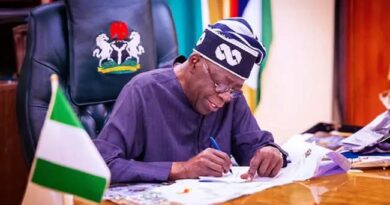
Tinubu made the declaration in his Independence Day address to the nation on Thursday, October 1, 2026, as Nigeria marked its 66th anniversary of independence.
The President acknowledged the difficulties Nigerians have faced over the years, including economic crises, insecurity, political upheaval and declining living standards, but said the country had remained resilient because of the determination and hard work of its citizens.
He said his administration, upon assuming office in 2023, was confronted with deep economic distortions that required difficult reforms, arguing that the measures were necessary to correct longstanding weaknesses in the economy.
According to him, the reforms were comparable to the treatment of a serious illness, insisting that Nigerians should not mistake the discomfort associated with the reforms for the underlying problems they were designed to address.
“Three and a half years later, the evidence that Nigeria’s economic outlook has improved is undeniable,” Tinubu said.
He said the economy had grown by more than four per cent in 2026, with both the oil and non-oil sectors contributing to the growth.
Tinubu also listed declining oil theft, lower inflation, rebuilt foreign reserves and greater stability in the foreign exchange market among the gains recorded under his administration.
He added that Nigeria recorded its highest-ever revenue from non-oil exports in 2025, exceeding $6 billion.
The President said the government’s economic focus had now shifted from correcting the country’s economic direction to achieving “shared and widespread prosperity.”
He explained that the new priority would be to reduce the cost of living by lowering the cost of production and transportation, while improving agricultural productivity, infrastructure, industrial capacity and access to finance.
Tinubu said his administration would expand mechanised irrigation and dry-season farming, improve access to seeds and fertiliser, increase mechanisation and invest in storage and transportation.
He also said the government was building and completing roads, railways and ports to improve connections between farms, factories and markets.
On employment, the President said jobs, enterprise and industrial growth would remain central to government policy, particularly as millions of young Nigerians enter the workforce every year.
He said the government would use Nigeria’s gas resources to power new industries, support the revival of factories, expand digital connectivity and provide skills, infrastructure and financing to businesses.
“I want to see more Nigerians making things. I want to see more Nigerian farms feeding our cities and supplying our factories. I want to see Nigerian businesses selling Nigerian goods to the whole world,” he said.
Tinubu also acknowledged that millions of Nigerians were still struggling with food, education, healthcare and transportation costs.
He said the government would continue strengthening social protection programmes, including direct support for poor households and improvements to the National Social Register.
The President highlighted the Nigerian Education Loan Fund (NELFUND) as part of efforts to expand access to higher education for students from low-income families.
He also cited the Consumer Credit Corporation (CREDICORP), saying it was providing working Nigerians with access to credit for essential assets such as vehicles, solar systems and digital devices.
Tinubu further pledged continued collaboration with state and local governments to strengthen primary healthcare, basic education and other essential public services.
He said his administration had paid salaries and pensions on time and in full since 2023 and had reformed the national pension programme to benefit retirees and vulnerable Nigerians.
The President, however, acknowledged that the challenges facing millions of Nigerians could not be resolved within a single administration.
“We cannot erase in four years what accumulated over generations. But we can change its course,” he said.
Tinubu said the government’s objective was not merely to manage poverty but to ultimately eliminate it through sustained economic growth and the creation of millions of productive opportunities.
He urged Nigerians to remain united and committed to building a prosperous country, saying the sacrifices associated with the reform process would eventually yield benefits.
“The age of reform has done its work. Now begins the age of prosperity,” Tinubu declared.
He described Nigeria’s future as a “Promised Land” of abundance and opportunity, where prosperity would be broadly shared and children could dream beyond the circumstances of their birth.
“Nigeria has corrected its course. We have passed through our own Red Sea. This is not the time to look back. Let us go forward together,” the President said.
He concluded by congratulating Nigerians on the 66th Independence Anniversary and called for continued faith in the country and its future.