Shettima: North Will Re-elect Tinubu in 2027
Vice President Kashim Shettima has expressed confidence that northern Nigeria will re-elect President Bola Ahmed Tinubu in the 2027 presidential election, but warned that the region’s support must not be taken for granted.
Shettima said the administration must earn the confidence of Nigerians through transparency, accountability and measurable achievements rather than relying solely on political endorsements.
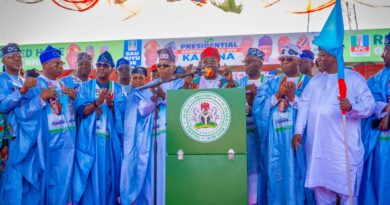
The Vice President made the remarks at the unveiling of the Arewa 4 Asiwaju movement, stressing that growing political support from the North comes with an obligation for the government to demonstrate tangible improvements in the lives of citizens.
According to him, the region has demonstrated strong confidence in Tinubu’s leadership, but sustaining that support requires honest engagement with Nigerians and clear explanations of the administration’s economic reforms.
“The North has spoken with a resounding voice and unmistakable conviction. From Adamawa to Zamfara, from Borno to Niger, we have spoken,” Shettima said.
He, however, cautioned that such political confidence should not make government officials complacent, noting that public support places greater responsibility on those in positions of authority.
Shettima maintained that Tinubu’s quest for a second term must be backed by the administration’s performance and a convincing explanation of how another four years would improve the welfare of Nigerians.
He also insisted that the North had no reason to fear Tinubu’s second term, while acknowledging that the government must address the concerns of citizens affected by ongoing economic reforms.
The Vice President admitted that Nigerians had experienced significant economic difficulties, warning supporters against ignoring genuine public concerns or using political rhetoric to defend government policies.
“Our citizens have endured difficult adjustments. We cannot pretend otherwise. What we owe them is an honest account of the decisions taken, the gains achieved and the difficulties that persist,” he said.
He added that excessive reliance on praise from supporters could prevent the government from recognising the challenges confronting ordinary Nigerians.
“We lose our hearing when applause becomes our only source of information,” Shettima stated.
The Vice President stressed that the experiences of traders struggling with rising business costs, unemployed graduates searching for opportunities and families battling increasing living expenses must inform government policies.
He warned that the consequences of ineffective policies are often felt most severely by ordinary households.
“A failed policy enters somebody’s home as a missed meal, an unpaid school fee or an opportunity lost,” he said.
Shettima further defended constructive criticism, describing it as an essential component of democratic governance and a necessary tool for improving public policies.
He said the administration should remain receptive to useful suggestions from Nigerians regardless of their political affiliations, ethnic backgrounds, religious beliefs or regions.
“There is no democracy without critics. Progress demands that our assumptions endure the examination of those who disagree with us,” the Vice President added.
He identified security, economic opportunities, poverty reduction, education and stronger public institutions as key priorities that should guide the administration’s efforts.
According to Shettima, farmers must be able to work safely, children should receive education that prepares them for productive lives, and public institutions must create an environment where hard work translates into meaningful opportunities.
“The farmer should be able to cultivate in safety. A child’s education should prepare that child for a productive life. Public institutions should give citizens confidence that effort can yield opportunity,” he said.
The Vice President’s remarks underscore the administration’s need to balance its political confidence ahead of the 2027 elections with growing public expectations for economic relief, improved security and better living conditions.