Jonathan Warns Politicians Against Putting 2027 Ambitions Above Nigeria’s Unity
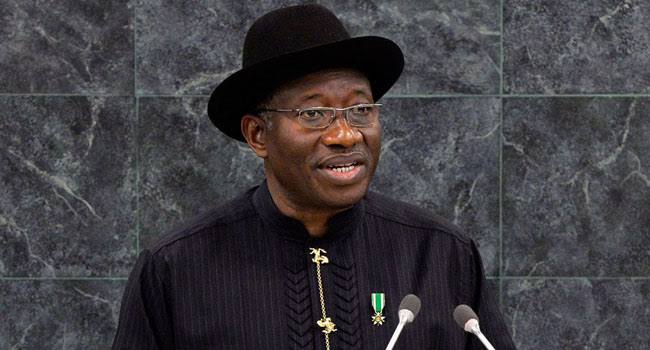
Former President Goodluck Jonathan has cautioned politicians against allowing their ambitions ahead of the 2027 general elections to undermine national unity, warning that political intolerance, ethnic divisions and electoral violence could threaten Nigeria’s stability.
Jonathan said political competition should remain centred on ideas, leadership and development rather than become a source of conflict capable of weakening the country’s social cohesion.
He expressed particular concern over the increasing use of political thugs and the mobilisation of young people to perpetrate violence, urging political leaders to discourage practices that could endanger peaceful coexistence.
The former President spoke at the third Peace and Security Conference organised by the Goodluck Jonathan Foundation in Abuja, with the theme, “Safeguarding Peace and Strengthening Social Cohesion in a Competitive Political Environment.”
He maintained that political ambition must never take precedence over the common interests and unity of the country.
Jonathan also expressed concern over controversies surrounding judicial decisions, particularly conflicting rulings by courts of coordinate jurisdiction, warning that such developments could undermine public confidence in the judiciary.
He said a loss of trust in the judicial system could encourage citizens to take the law into their own hands, with potentially disastrous consequences for national stability.
The former President urged political stakeholders to respect opposing opinions and acknowledge the right of every eligible Nigerian to seek political office, irrespective of political, ethnic or religious differences.
He further called on voters to prioritise competence, national interest and public service when electing leaders.
Meanwhile, the Chairman of the Independent National Electoral Commission (INEC), Prof. Joash Amupitan, warned political parties, candidates and their supporters against violence, intimidation and inflammatory political campaigns ahead of the elections.
Amupitan, represented by National Commissioner May Agbamuche-Mbu, said although political competition naturally involved disagreements and intense campaigns, such activities must not degenerate into violence and lawlessness.
He specifically warned against attacks, harassment and intimidation of INEC officials and ad hoc election personnel, insisting that those responsible would face legal consequences.
The INEC chairman also identified misinformation, disinformation, artificial intelligence-generated materials, deepfake videos and cloned voices as emerging threats to electoral peace and credibility.
He disclosed that the commission had established a dedicated Artificial Intelligence Division within its Information and Communication Technology Department to monitor digital threats and verify information circulating online.
Amupitan reaffirmed INEC’s commitment to conducting peaceful, credible and inclusive elections, with the presidential and National Assembly polls scheduled for January 16, 2027, while governorship and state assembly elections are slated for February 6, 2027.
In his keynote address, former President of the ECOWAS Commission, Dr. Omar Alieu Touray, cautioned against the manipulation of ethnic, religious and regional identities for political advantage.
Touray argued that democratic competition should be driven by competing ideas, policies and development programmes rather than divisions based on identity.
He stressed that disagreeing with an opponent’s policies was a legitimate democratic practice, but denying someone the right to govern because of their ethnic, religious or regional background amounted to exclusion.
Similarly, the Minister of Defence, Gen. Christopher Musa (retd.), urged political leaders to demonstrate restraint, maturity and statesmanship, warning against hate speech, misinformation and divisive narratives capable of worsening existing tensions.
Musa, represented by his Special Adviser on Strategic Communication, Mercy Ndi Bala, said national security extended beyond military operations and equipment, stressing that public trust, social cohesion and cooperation between communities and security agencies were equally important.
He advocated a collective approach to national security involving government institutions, traditional and religious leaders, civil society organisations, the media and young people.
Earlier, the Executive Director of the Goodluck Jonathan Foundation, Ms. Ann Iyonu, expressed concern over declining public confidence in Nigeria’s electoral process.
She cited a 2026 Afrobarometer survey released on November 11, which indicated that fewer than four in 10 Nigerians believed the 2027 general elections would be free and fair.
Iyonu warned that the credibility of the forthcoming elections would have implications beyond Nigeria, given the country’s economic influence and strategic importance to regional security.