Poverty, Energy Crisis Fuel Deforestation in Sokoto
By Fahad Faruk Galadanchi
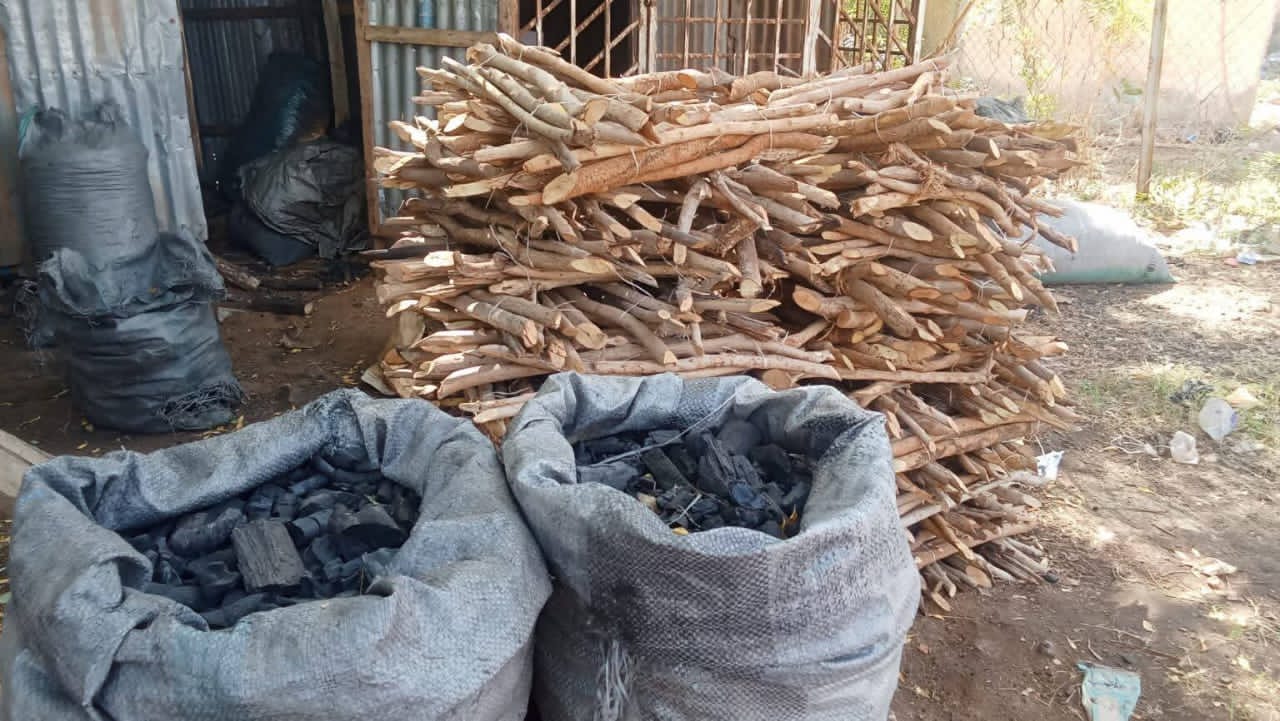
By the roadside in Sokoto metropolitan area, Umar Abubakar stacks bags of charcoal and bundles of firewood as he prepares for the day’s business. The 31 year old National Certificate in Education (NCE) graduate had hoped to build a career in the classroom after completing his studies in 2023. Instead, years of unsuccessful job searches pushed him into the charcoal trade.
Today, the business became source of his livelihood, but it also represents a growing challenge confronting communities across Northern Nigeria; the increasing dependence on firewood and charcoal for cooking and the resulting pressure on already fragile forest resources.
“I wanted a teaching job after graduation, but it never came. I started this business with a small amount of money from family and friends, and now it is what keeps me going” he said.
Across Sokoto State, firewood and charcoal have become essential household commodities as families struggle with rising cost of living and the high price of cooking gas. In many communities, biomass fuel remains the most affordable option for preparing daily meals.
At Kara Market in Sokoto, women gather around piles of firewood, purchasing quantities that suit their household needs. Among them is Aminatu Saidu, a mother of four, who says she spends between N500 and N800 each day on cooking fuel.
“Gas is expensive for many families, and firewood is what most people can afford” she affirmed.
Like many residents, Aminatu acknowledges that trees are disappearing from nearby communities but says realities of economic hardship leaves families with few alternatives.
Environmental experts warn that this growing reliance on firewood is accelerating deforestation across northern Nigeria, where forest resources are already under pressure from desertification, population growth, overgrazing, and unsustainable land use practices.
According to available national data, more than 70 per cent of Nigerian households still rely on firewood or charcoal for cooking. The dependence is highest in rural and semi-urban communities where electricity supply remains unreliable and access to clean energy technologies is limited.
The consequences are becoming increasingly visible. Nigeria is estimated to lose hundreds of thousands hectares of forest annually through logging, agricultural expansion, fuelwood extraction, and advancing desert conditions.
In Sokoto State, environmental degradation has emerged as one of the most pressing ecological concerns. Large areas that once supported trees and vegetation have steadily declined, exposing communities to stronger winds, declining soil fertility, and rising temperatures.
Farmer Muhammadu Bello recalls a time when trees provided natural protection for farms and settlements.
“Years ago, there were many trees around our community” he said. “Now the land is becoming hotter and drier. Strong winds damage crops because there are fewer trees to serve as windbreaks”.
Climate specialists say the loss of tree cover contributes directly to land degradation by increasing soil erosion, reducing moisture retention, and limiting the environment’s capacity to withstand extreme weather conditions.
Despite existing forestry regulations and periodic tree-planting campaigns, enforcement remains a major challenge. In many rural communities, trees are cut daily for commercial purposes without adequate monitoring or replacement.
Environmental activist Aminu Suleiman believes public awareness remains low regarding the long-term consequences of deforestation.
“Many people do not realise that cutting down trees today creates environmental problems that affect future generations” he said.
“Communities are already experiencing the effects through higher temperatures and changing weather patterns” He added.
As concerns grow, attention is increasingly shifting toward cleaner cooking alternatives. Nigeria’s Energy Transition Plan identifies access to clean cooking solutions as a key component of achieving sustainable energy goals and reducing environmental degradation.
Several organisations have begun promoting technologies such as solar powered cookstoves and other renewable energy solutions designed to reduce dependence on firewood and charcoal. Advocates argue that expanding access to affordable alternatives could help protect forests while improving public health.
Health experts note that prolonged exposure to smoke from traditional cooking fuels contributes to respiratory illnesses, particularly among women and children who spend significant time around cooking areas.
Stakeholders are therefore calling for a combination of policy reforms, public education, afforestation programmes, and investment in clean energy infrastructure. They insist that addressing deforestation requires both environmental protection measures and economic solutions capable of reducing households’ dependence on biomass fuels.
For now, however, the realities of poverty and limited energy access continue to drive demand for firewood across Northern Nigeria. As charcoal sellers expand their businesses and households search for affordable cooking fuel, the region’s forests remain under increasing threat, highlighting the difficult balance between survival and environmental sustainability.