Atiku Fires Back at Tinubu, Accuses President of Dodging Responsibility for Hunger
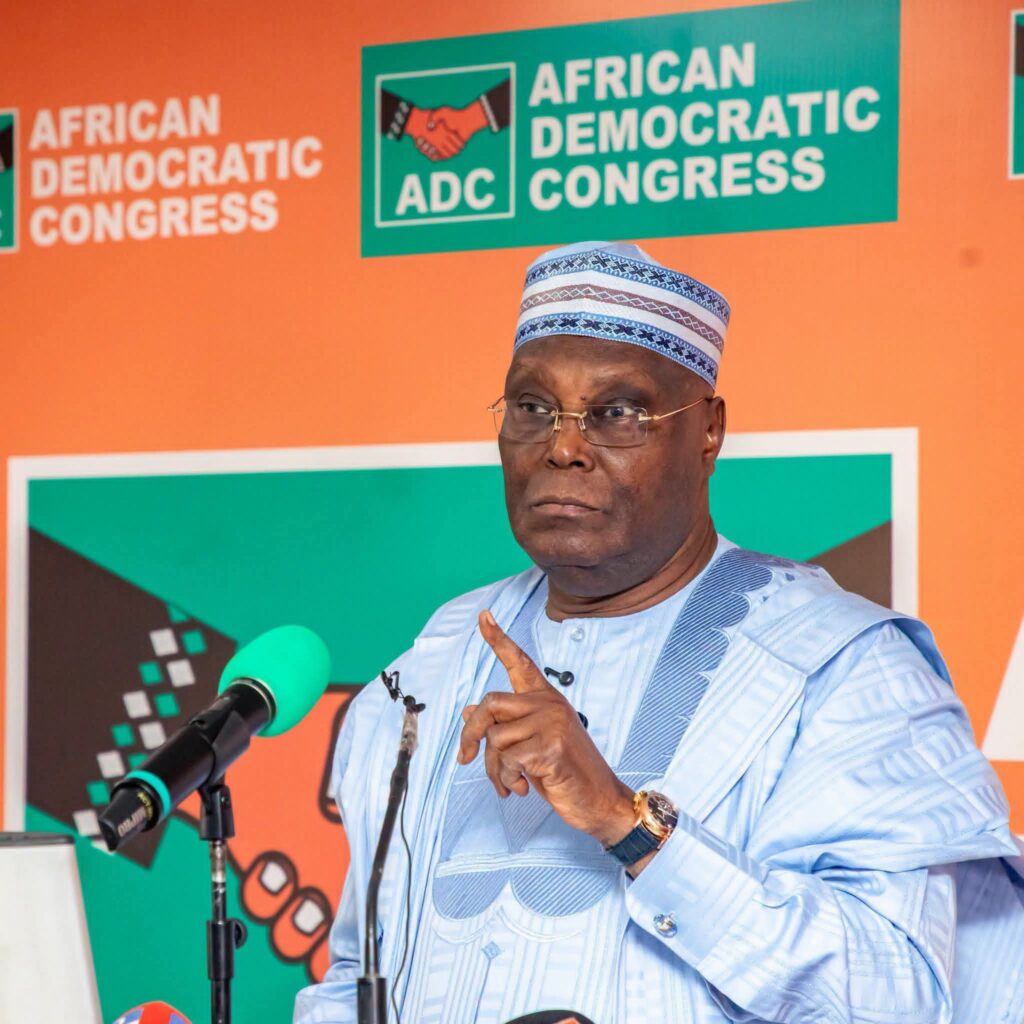
Former Vice President and African Democratic Congress (ADC) presidential candidate, Atiku Abubakar, has accused President Bola Tinubu of evading responsibility for Nigeria’s worsening economic hardship after the President blamed the opposition for hunger and poverty in the country.
Atiku described Tinubu’s remarks as a “delusional” and “shameless” attempt to shift blame, insisting that Nigerians would hold the ruling All Progressives Congress (APC) accountable for the economic challenges confronting the country.
The former vice president’s response followed Tinubu’s comments at the APC presidential campaign flag-off rally at Ranchers Bees Stadium in Kaduna State on Saturday, where the President asked who created the hunger and poverty being highlighted by his political opponents.
In a statement issued on October 24, 2026, by Phrank Shaibu, Director of Strategic Communication of the ADC Presidential Campaign Council, Atiku argued that the APC had governed Nigeria for more than a decade and could not absolve itself of responsibility for the country’s economic conditions.
He maintained that the hardship Nigerians were experiencing was real and could not be dismissed by blaming opposition parties for speaking about it.
Atiku also criticised the President over the reported commissioning of the unfinished Abuja-Kaduna Expressway, arguing that public infrastructure could not be considered complete merely through speeches and ceremonial events.
The ADC presidential candidate questioned the Tinubu administration’s handling of petrol subsidy removal, the depreciation of the naira, rising poverty and government spending.
He cited a World Bank estimate that 63 per cent of Nigerians could be living below the national poverty line in 2026, while also raising questions about the extension of the 2024 budget into 2025 and the administration’s management of public finances.
Atiku further demanded explanations over spending recorded under energy security, alleged expenditure linked to Nigerian National Petroleum Company Limited (NNPC) pipelines, a reported $12.4 billion gap in Nigeria’s external accounts for the first half of 2026, and $22.5 million in “other charges” associated with the Abu Dhabi financing facility.
He called on the Federal Government to provide Nigerians with clear explanations of the funds involved, their beneficiaries and the outcomes of the expenditure.
Beyond the economy, Atiku accused the administration of failing to adequately address persistent killings, kidnappings and displacement in several communities, arguing that insecurity remained a major concern for Nigerians.
“You cannot govern for three years, make life harder, and then blame others for describing the hardship,” Atiku said in the statement.
He added that Nigerians were more interested in knowing what the government had done to ease their suffering than in hearing explanations that blamed political opponents.
Atiku said the 2027 presidential election would serve as a referendum on Tinubu’s performance, arguing that voters would judge the administration based on their experiences in their homes, markets and communities rather than campaign promises.
He concluded that Nigerians had rejected the administration, expressing confidence that the electorate would deliver its verdict through the ballot box in 2027.