Editorial: State Police Must Be Built on Constitutional Integrity, Not Procedural Shortcuts
The debate over the establishment of State Police has rightly dominated Nigeria’s political and constitutional landscape. Across the country, there is growing consensus that the nation’s security challenges require bold reforms capable of improving community policing, strengthening federalism and protecting lives and property. Properly designed, State Police could become one of the most significant constitutional reforms since the return to democratic rule.
However, no matter how desirable a reform may be, its legitimacy depends not only on its objectives but also on the process through which it is achieved.
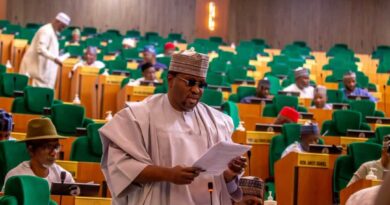
Recent allegations surrounding the purported passage of the State Police Constitutional Alteration Bill in the House of Representatives have raised serious constitutional and procedural questions. Claims that votes from lawmakers outside the chamber were counted through WhatsApp, concerns about whether the constitutionally required two-thirds majority was physically present, and allegations that meaningful clause-by-clause consideration was denied have generated widespread public debate.
If these allegations are accurate, they deserve careful examination. Constitutional amendment is not an ordinary legislative exercise. Section 9 of the 1999 Constitution prescribes a rigorous process precisely because constitutional provisions define the structure of governance, distribute powers and protect the rights of citizens. Any deviation from that process risks undermining public confidence in the very institutions responsible for safeguarding democracy.
The questions being asked are not trivial. Can lawmakers who are absent from the chamber lawfully participate in constitutional voting through an informal messaging platform? Does the House Standing Order or the Constitution expressly recognise such a method? Can attendance alone be equated with participation in a vote? These are legal questions that require clear and authoritative answers, not political rhetoric.
Equally troubling are allegations that attempts by the Minority Leader to raise a Point of Order were not fully entertained. Parliamentary procedure exists to ensure that constitutional concerns are addressed before irreversible decisions are taken. Respect for dissent and due process is one of the defining characteristics of democratic lawmaking.
This debate should not be mistaken for opposition to State Police itself. Many Nigerians support the principle because of the country’s complex security realities. The issue is whether such a far-reaching constitutional reform should be enacted through a process that is beyond reproach.
History has shown that reforms introduced without broad consultation and meticulous legislative scrutiny often face prolonged legal disputes and implementation challenges. Nigeria cannot afford such uncertainty on a matter as consequential as policing powers.
The House of Representatives owes Nigerians clarity. If the constitutional requirements were fully complied with, the records should demonstrate that compliance transparently. If procedural deficiencies occurred, they should be corrected through lawful legislative mechanisms. Constitutional amendments derive their authority from strict adherence to constitutional procedures, not from expediency.
State Police may indeed be necessary for Nigeria’s future. But the Constitution cannot be strengthened by weakening the very procedures established to amend it.
Ultimately, the credibility of State Police will depend not only on the safeguards written into the law but also on the integrity of the process that brings it into existence. Nigerians deserve both meaningful security reform and unwavering respect for constitutional democracy.
Editor’s Note: This editorial reflects GaskiyaCast’s opinion based on issues and allegations raised in the public domain regarding the legislative process for the State Police Constitutional Alteration Bill. The concerns discussed remain subject to clarification by the House of Representatives and, where applicable, judicial determination.