Nigeria Woos Polish Investors with $78.5bn Portfolio, Targets 366,000 Jobs
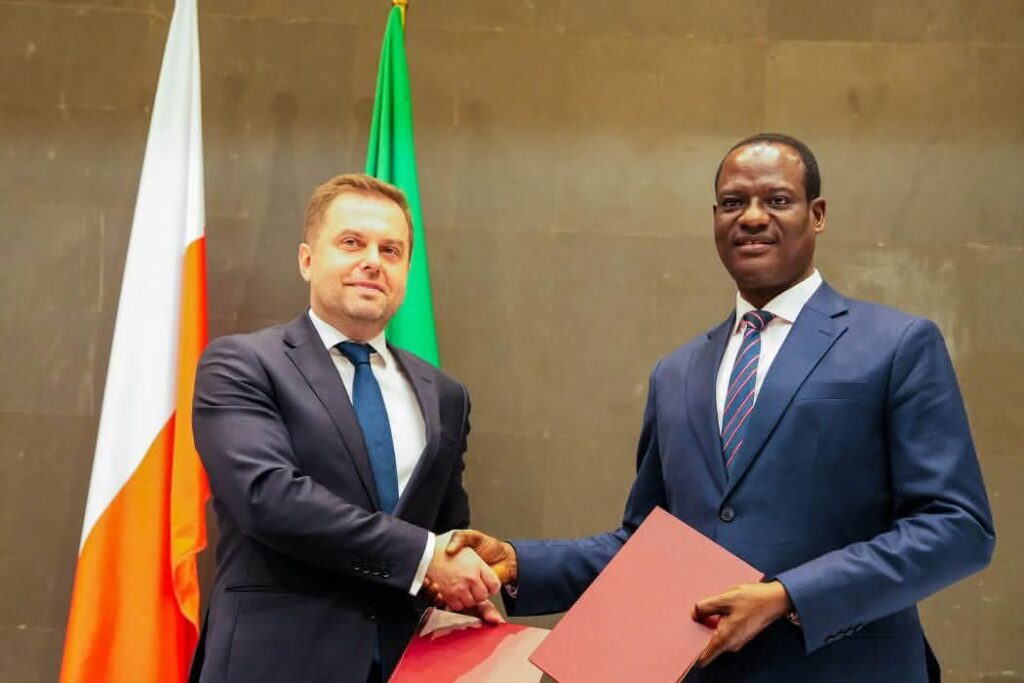
The Federal Government has invited Polish investors to explore Nigeria’s $78.5 billion investment portfolio, comprising 65 projects expected to create at least 366,000 jobs.
Minister of Finance and Coordinating Minister of the Economy, Taiwo Oyedele, made the appeal on Wednesday at the second Polish-Nigerian Economic Forum in Lagos, where he identified agriculture, energy, transportation, digital technology, manufacturing and healthcare as key sectors for investment cooperation.
Oyedele said the investment portfolio, known as Project Nigeria, was designed to attract private capital, stimulate economic activities and translate the government’s ongoing reforms into sustainable growth and employment opportunities.
“Last month, we launched Project Nigeria. Our investment portfolio has 65 marketable, feasibility-backed projects, worth about $78.5 billion, expected to create at least 366,000 jobs. These projects are open to Polish investors today,” he said.
The minister maintained that Nigeria’s economic reforms were beginning to produce positive outcomes, citing a 4.43 per cent economic growth recorded in the second quarter of 2026, alongside a sustained decline in inflation, which reached its lowest level in six years in October.
He further disclosed that the country’s foreign reserves had exceeded $55 billion, while private capital inflows increased from approximately $300 million in 2023 to nearly $6 billion in 2026.
According to him, Nigeria’s tax-to-GDP ratio also improved from about seven per cent in 2023 to 12.5 per cent in 2025, providing additional fiscal capacity for government investment in development.
Oyedele reaffirmed the Federal Government’s commitment to maintaining the removal of petrol subsidy and the unification of foreign exchange rates under President Bola Tinubu’s administration.
“Under the leadership of President Bola Ahmed Tinubu, GCFR, we removed the petrol subsidy and unified the exchange rates. And we have not turned back. Mr President has been very clear. There will be no return to fuel subsidies and no return to multiple exchange rates,” he stated.
Despite the growing diplomatic relationship between Nigeria and Poland, the minister observed that bilateral trade remained relatively low compared with the economic potential of both countries.
He said Poland exported goods worth approximately $169 million to Nigeria in 2025, while Nigeria’s exports to Poland stood at about $565 million, with crude oil accounting for more than 90 per cent of the country’s exports.
The combined trade volume of approximately $734 million, he said, was insufficient considering Nigeria’s position as Africa’s largest economy and Poland’s emergence as a trillion-dollar economy.
“For a partnership between Africa’s most populous and most significant nation, and a European economy that has recently crossed $1 trillion, certainly we can do more,” Oyedele said.
He called for the diversification of Nigeria’s exports to include processed agricultural products, fertilisers and manufactured goods, while encouraging the country to benefit from Poland’s expertise in machinery, technology and industrial services.
The minister also urged Polish businesses to leverage Nigeria’s strategic position within the African Continental Free Trade Area (AfCFTA), which provides access to a market of approximately 1.4 billion people.
He emphasised the importance of developing partnerships that would strengthen local production and technical expertise rather than relying solely on imported equipment and foreign services.
“In each of these areas, let us build local capacity into the partnership. Training should accompany technology. Maintenance should accompany equipment. And Nigerian supply should grow alongside major projects,” he said.
To strengthen economic cooperation, Oyedele proposed the establishment of a working-level engagement channel between the finance ministries of both countries to coordinate investment opportunities, particularly Polish participation in Project Nigeria.
He also encouraged Poland’s export credit and development finance institutions, KUKE and BGK, to explore co-financing opportunities with Nigeria’s Bank of Industry and Nigerian Export-Import Bank.
Additionally, he called for the advancement of agreements on double taxation avoidance and investment protection to provide greater confidence and certainty for businesses operating in both countries.
On infrastructure development, Oyedele highlighted the modernisation of the Lagos port complex, comprising Apapa and Tin Can Island ports, as an example of successful international financing cooperation.
He described the $1 billion port modernisation initiative, supported by UK export finance and Polish reinsurance arrangements, as Nigeria’s largest sovereign export credit transaction since 2009.
However, he cautioned that the government would carefully assess the affordability, repayment obligations and foreign exchange risks associated with financing arrangements.
“Public guarantees can support investments, but they create obligations that deserve scrutiny. Good financing should help viable projects succeed without placing an unsustainable burden on the future,” he added.
In his remarks, Poland’s Deputy Foreign Minister, Marcin Bosacki, said participation in the second edition of the forum had nearly tripled compared with the inaugural event, reflecting increasing interest among Polish businesses in Nigeria and the wider African market.
He said the Polish delegation included companies specialising in medical technology, healthcare, defence, agricultural processing equipment, construction, engineering, information and communications technology, cybersecurity and maritime services.
“This is a clear sign of the growing interest of Polish businesses and entrepreneurs in Nigeria and, more globally, in the immense opportunities offered by African markets,” Bosacki said.
He attributed Poland’s emergence as the world’s 20th-largest economy to economic transformation, business resilience and entrepreneurial innovation, noting that both countries had considerable opportunities to exchange expertise and establish mutually beneficial partnerships.
Bosacki also disclosed that Poland had committed more than $150 million to the Lagos port modernisation project to support the procurement of advanced technologies and equipment supplied by Polish companies.
He added that the investment would be complemented by more than $500 million in credit guarantees provided by Poland’s Export Credit Insurance Corporation, KUKE.
“For Poland, this project is about much more than investment figures. It is a concrete expression of our confidence in Nigeria’s economic potential, our commitment to a long-term partnership and the friendship and respect we have for Nigeria and the whole African continent,” he said.
The Polish deputy minister urged both countries to build on the port modernisation initiative by pursuing additional investment opportunities and developing lasting commercial relationships.
The second Polish-Nigerian Economic Forum was organised by the Polish Investment and Trade Agency in collaboration with the Embassy of the Republic of Poland in Abuja.
The forum brought together government officials, business executives, investors, financial institutions and representatives of the organised private sector from both countries to discuss opportunities for expanding trade, investment and economic cooperation.