UNICEF Raises Concern Over Child Rights, Calls for Increased Investment in Education, Healthcare
The United Nations Children’s Fund (UNICEF) has urged governments and other stakeholders to strengthen efforts towards protecting children’s rights, improving access to quality education and healthcare, and ensuring a safe environment for children to thrive.
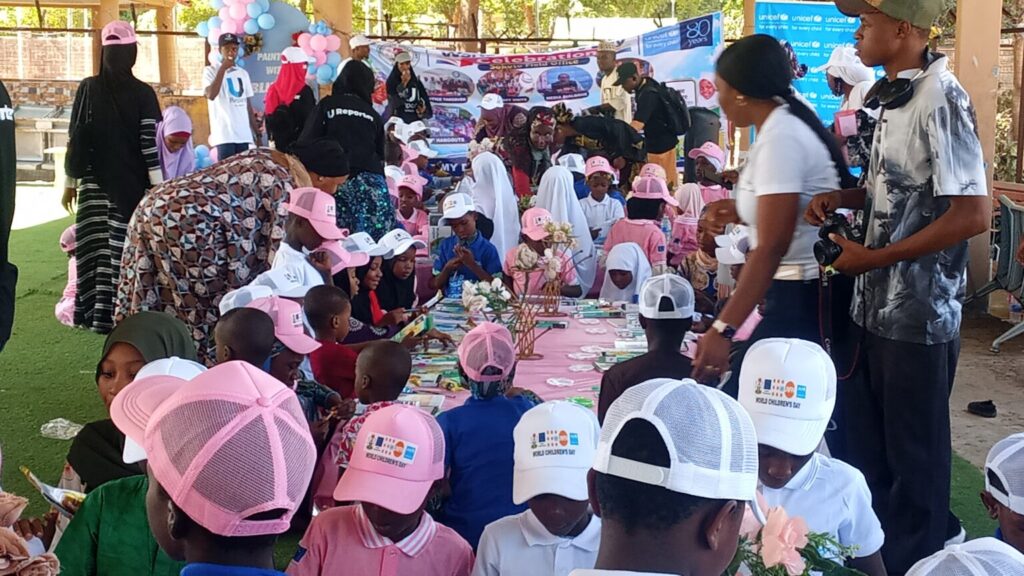
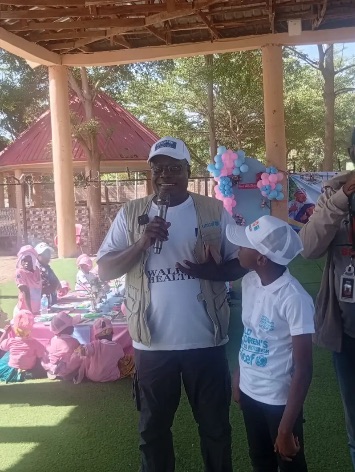
The Head of UNICEF Sokoto Field Office, Mr. Michael Juma, made the appeal in Sokoto during activities commemorating the 2026 World Children’s Day, emphasising the need to protect children against violence, discrimination, exploitation and other forms of abuse.
Juma said the annual celebration, themed “My Day, My Rights, My Future,” provides an opportunity to promote children’s participation in decisions affecting their lives, amplify their voices and remind governments of their responsibilities under the United Nations Convention on the Rights of the Child.
He stressed that commitments to children’s welfare must translate into concrete actions, particularly in providing education, healthcare, adequate nutrition, clean water and protection from harmful practices.
Speaking during a media dialogue organised to mark the occasion, he challenged journalists to use their platforms to promote children’s rights by reporting achievements as well as the challenges confronting vulnerable children.
Highlighting UNICEF-supported interventions across Sokoto, Kebbi and Zamfara states, Juma disclosed that the organisation had supported the development of child protection legislation, Family Court Rules on the rehabilitation and reintegration of children in conflict with the law, and a state-level Social Protection Policy.
He added that UNICEF had also supported the development of a Food and Nutrition Policy to strengthen interventions addressing moderate and severe acute malnutrition among children.
On education, Juma revealed that more than 620,000 out-of-school children had been identified for possible reintegration into formal learning, while over 98,000 children had benefited from the Teaching at the Right Level programme to improve foundational literacy and numeracy.
In the health sector, he said UNICEF-supported programmes had facilitated measles-rubella vaccination for approximately 7.8 million children, while about five million children under five had benefited from relevant immunisation interventions.
He further disclosed that Kebbi was among the states selected for Nigeria’s malaria vaccine pilot programme, with over 148,000 children receiving the first dose and approximately 130,000 receiving the second dose of the four-dose vaccine schedule.
Addressing the impact of insecurity on education, Juma maintained that children displaced by conflict or living in internally displaced persons’ camps must not be denied access to quality learning.
He said UNICEF was supporting accelerated basic education, Integrated Quranic Schools, the enrolment of displaced children in host-community schools and professional development for teachers.
According to him, radio-based learning initiatives and the Nigeria Learning Passport were also being deployed to ensure continued access to education, particularly for children in communities affected by insecurity.
He noted that UNICEF was expanding resource mobilisation efforts to sustain its education interventions amid declining global development funding.
Juma emphasised that meaningful progress in advancing children’s rights would require stronger collaboration among government agencies, development partners, civil society organisations, traditional and religious leaders, community stakeholders and parents, particularly at local government and ward levels.
Also speaking, UNICEF Child Protection Specialist for the Sokoto Field Office, Mr. Pius Wamanwa, said the celebration was designed to promote interaction, teamwork and creativity among children through activities such as drawing and painting.
He explained that creative engagements also provide an opportunity to understand children’s experiences, emotions and perspectives.
World Children’s Day is observed annually on November 20 to commemorate the adoption of the Declaration of the Rights of the Child in 1959 and the Convention on the Rights of the Child in 1989.
The global observance provides an opportunity for governments and stakeholders to renew their commitment to ensuring children’s survival, protection, development, education and participation.