
Dasuki Raises Alarm Over INEC Voter Register, Warns Against Threats to 2027 Elections
By Nafiu Muhammad Lema
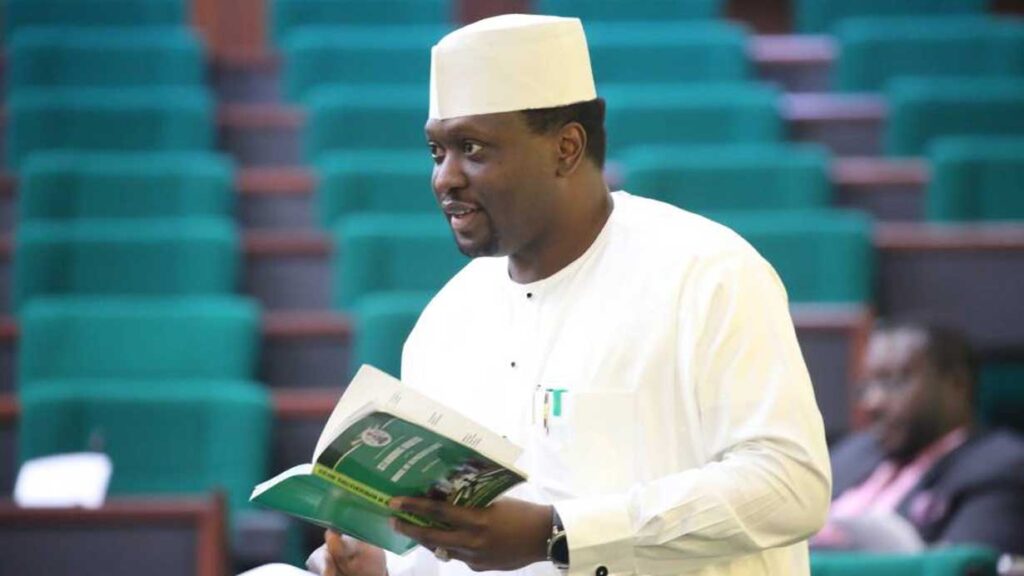
Deputy Minority Leader of the House of Representatives, Rep. Abdussamad Dasuki, has expressed concern over the credibility of the Independent National Electoral Commission’s (INEC) voter database, warning that weaknesses in the register could undermine the integrity of the 2027 general elections.
Dasuki also raised concerns over what he described as a shrinking political space, increasing attacks on opposition parties and growing political intolerance ahead of the next general elections.
The lawmaker made the remarks while addressing supporters of the African Democratic Congress (ADC) presidential candidate, Atiku Abubakar, in Lagos at the weekend.
He questioned INEC’s ability to guarantee a credible final voters’ register, insisting that Nigerians deserved clear assurances that the database to be used for the 2027 elections would be accurate and free from fraudulent entries.
“INEC has not provided the assurance to Nigerians that the final register that would be used for next year’s election would be credible. This should worry all Nigerians,” Dasuki said.
His concerns followed revelations by INEC that some registration officials allegedly abused their access to create fraudulent voter records, including entries containing fake photographs and manipulated biometric information.
The commission also recently disclosed that it had removed 1,609,553 records from its voters’ database following a technical assessment, a development that has raised questions about the effectiveness of its registration and verification procedures.
Dasuki disclosed that INEC Chairman, Prof. Joash Amupitan, would appear before a House committee this week to explain the circumstances surrounding the discovery of fraudulent records, the removal of over 1.6 million entries and measures being taken to ensure the credibility of the final register.
INEC has maintained that it remains committed to completing its verification and data-cleaning exercises ahead of the certification of the final voters’ register scheduled for December 15, 2026.
Beyond electoral data concerns, the lawmaker criticised what he described as increasing restrictions on opposition political activities and the growing atmosphere of intolerance under the administration of President Bola Tinubu.
He called on the President to withdraw his controversial “All is fair in politics” remark, warning that such statements could send the wrong message to political actors and encourage actions capable of undermining democratic principles.
“Although the President may have intended his remarks as an expression of determination to defend his political position, such language, coming from the nation’s highest political office, risks sending the wrong signal to political actors,” he stated.
Dasuki argued that political competition must be conducted within constitutional boundaries, with respect for human rights and the rule of law.
“In a democracy, not everything is fair in politics. Political competition must operate within the boundaries of the Constitution, the rule of law, respect for human rights and the fundamental principles of democratic engagement,” he said.
The lawmaker cited alleged attempts to deny opposition parties access to public facilities, impose excessive charges on campaign billboards, interfere in opposition party affairs and intimidate political candidates and their supporters.
He specifically referenced the controversy surrounding the ADC presidential campaign flag-off in Sokoto State, where the party accused the state government of denying it access to public facilities traditionally used for political activities.
He also cited the reported disruption of a Nigeria Democratic Congress (NDC) town hall meeting at Classique Event Centre in Oregun, Lagos, by suspected political thugs.
Dasuki further recalled the reported attack on the Benin City residence of former Edo State Governor, Chief John Odigie-Oyegun, during a political meeting attended by opposition figures, including Peter Obi and Olumide Akpata.
On campaign financing, he expressed concern over reports of exorbitant billboard permit charges in some states, arguing that such restrictions could prevent opposition parties from competing on equal terms.
He warned that the combination of political intimidation, restrictions on campaign activities and attacks on opposition supporters could weaken democratic institutions and limit citizens’ freedom to make political choices.
Dasuki also raised concerns about conflicting court judgments and prolonged legal disputes involving opposition parties, cautioning against any attempt to undermine judicial independence through political interference.
He maintained that protecting democratic institutions, ensuring credible elections and guaranteeing equal opportunities for all political parties were essential to the survival of Nigeria’s democracy.