Ebola: Senate Seeks Emergency Funding, Mandatory Screening at All Entry Points
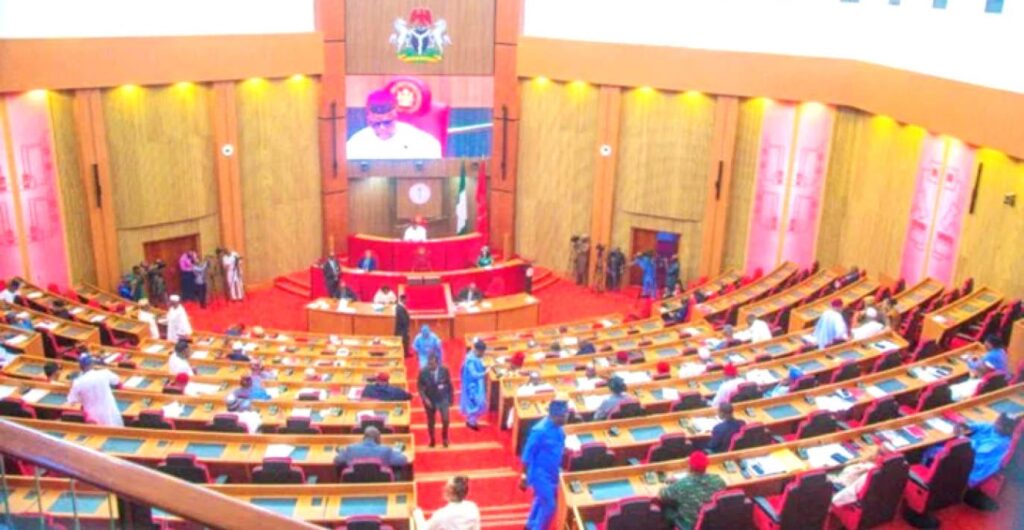
The Nigerian Senate has called on the Federal Government to release emergency funds to strengthen disease surveillance and enforce compulsory health screening at all international airports, seaports and designated land borders to prevent the spread of Ebola and other epidemic-prone diseases.
The resolution followed a motion of urgent national importance sponsored by Senator Francis Faduyile, who expressed concern over the spread of the Bundibugyo Ebola virus and its potential threat to Nigeria’s public health system.
According to Channels Television, Faduyile warned that the outbreak, which originated in the Democratic Republic of the Congo (DRC), had spread to other African countries, including Uganda and Kenya, raising fears that infected travellers could enter Nigeria through third countries.
The senator also cited the Nigeria Centre for Disease Control and Prevention’s (NCDC) assessment of the risk of Ebola importation, recalling the 2014 outbreak in Nigeria, when an infected traveller arrived in Lagos.
Although the Senate acknowledged the Federal Government’s existing preventive measures, including health declaration forms and increased screening at entry points, lawmakers expressed concern that the protocols were limited to travellers arriving from selected countries.
They warned that restricting screening to specific countries could create gaps in Nigeria’s disease surveillance system, particularly amid reported shortages of personnel and essential equipment at some entry points.
The lawmakers also questioned the continued reliance on the Quarantine Act of 1926, calling for a modern legal framework to address emerging public health threats.
The Senate subsequently urged the Federal Ministry of Health and Social Welfare, the NCDC and Port Health Services to make health screening compulsory for all international arrivals, irrespective of nationality or country of departure.
The proposed screening measures include health declaration forms, temperature checks and assessments for symptoms associated with infectious diseases.
It further recommended enhanced screening for travellers who had visited or transited through affected areas within the preceding 21 days, alongside exit screening for departing passengers during declared public health emergencies.
To strengthen implementation, the Senate called on the Federal Ministry of Health and Social Welfare, the Federal Airports Authority of Nigeria and the Nigeria Immigration Service to provide entry points with adequately trained Port Health officers, thermal scanners, personal protective equipment and isolation facilities.
Lawmakers also urged the Federal Government to ensure that isolation and treatment centres across the 36 states and the Federal Capital Territory were adequately equipped and prepared to respond to potential outbreaks.
On funding, the Senate called for the immediate release of emergency resources from the service-wide vote to reinforce surveillance and response capacity. It also urged the relevant ministries to provide adequate funding for the NCDC and Port Health Services in the 2027 budget and release outstanding allocations.
The upper chamber further advocated replacing the Quarantine Act of 1926 with updated public health legislation aligned with the International Health Regulations of 2005.
The Senate said stronger preparedness was necessary given Nigeria’s existing public health challenges, including Lassa fever, cholera and diphtheria, which could further strain the country’s healthcare system.
FG Confirms Ebola Case in Abuja
The Senate’s resolution comes as the Federal Government announced a confirmed case of Ebola virus disease in the Federal Capital Territory on Wednesday.
The Coordinating Minister of Health and Social Welfare, Prof. Muhammad Pate, disclosed in Abuja that laboratory tests had confirmed an imported case involving a woman who recently travelled to Uganda.
According to the minister, the patient returned to Nigeria with symptoms on October 7, while her condition reportedly deteriorated four days later before subsequent tests confirmed the infection.
However, Uganda’s Ministry of Health denied reports of an Ebola outbreak in the country, stating that investigations were ongoing to establish where the patient contracted the virus.
The Ugandan authorities maintained that travelling through the country did not, in itself, establish that the infection originated there.
The ministry also said it was awaiting detailed information from Nigerian authorities about the patient’s travel itinerary and clinical history to support further investigations and any necessary contact tracing.
Meanwhile, the report indicated that the outbreak had affected several African countries following its emergence in the DRC in May, with Kenya reporting its ninth case on Tuesday.
Health authorities in the DRC have also reported substantial infections and deaths associated with the outbreak, which the report described as the deadliest in the country’s history.
The Senate’s proposed measures are aimed at strengthening Nigeria’s preparedness, closing gaps in border surveillance and ensuring a coordinated response to the threat of Ebola and other infectious diseases.