2027: ADC Northwest Candidates Unveil Regional Security, Economic Development Blueprint
By Nafiu Muhammad Lema
Governorship candidates of the African Democratic Congress (ADC) in the Northwest have begun moves to develop a coordinated security and socioeconomic development strategy for the region ahead of the 2027 elections.
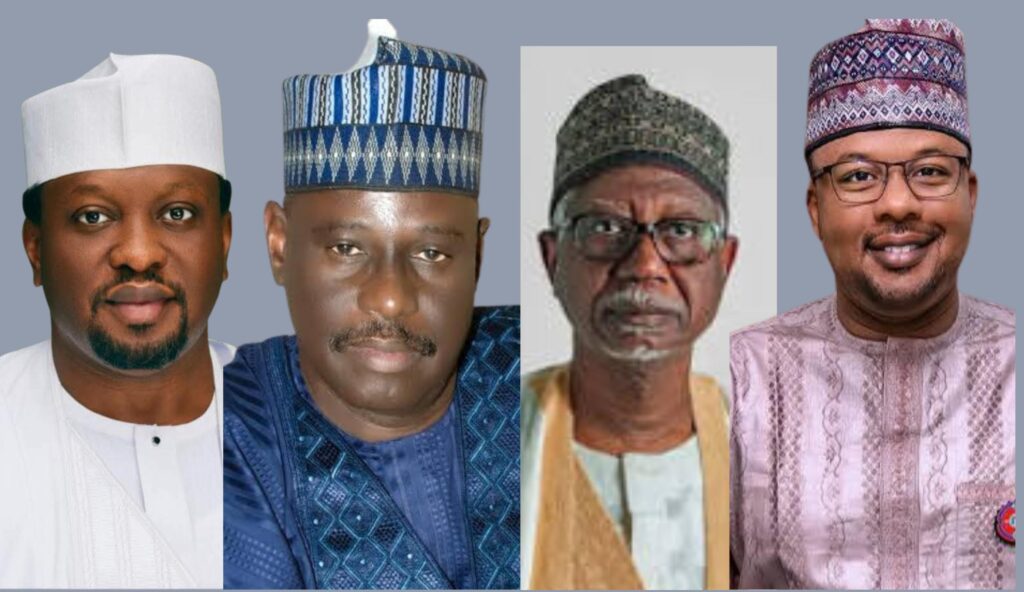
Hon. Abdussamad Dasuki, Chairman of the Central Coordination Committee of the ADC Northwest Governorship Candidates Forum and member of the House of Representatives representing Tambuwal/Kebbe Federal Constituency, disclosed this during a Hausa live programme anchored by Salihu Tanko Yakasai on Premier FM, Kano, which was monitored by GaskiyaCast.
Dasuki said the governorship candidates had recognised that the security and development challenges confronting the Northwest could not be effectively addressed by individual states acting alone.
He said the candidates had therefore sought the expertise of professionals in security, governance and community development to produce a comprehensive blueprint that would guide their administrations if elected.
“We have agreed that we need to bring in people who are knowledgeable and experienced in these areas to develop a workable plan. If, by God’s grace, we win the elections, that is the plan we intend to implement,” Dasuki said.
He disclosed that consultations had been held with experts, including Major General Aminu Bande (rtd.) and Professor Abubakar Siddique Mohammed, who are Co-Chairmen of the Forum’s Technical Committee.
According to Dasuki, the proposed framework is expected to be completed within one to two months and will reflect the peculiar needs of each state while incorporating contributions from citizens on the policies they want their governments to implement.
He said committees comprising experts in different fields would soon be announced to undertake the policy-design process and assign responsibilities across the various sectors.
One of the proposals under consideration, Dasuki said, is the deployment of modern technology, including drones, to support security agencies in monitoring terrorist and bandit activities and enable quicker responses to emerging threats.
The lawmaker also criticised the All Progressives Congress (APC)-led administrations in the region, accusing them of failing to adequately address the worsening insecurity.
He said the ADC candidates had also reviewed the finances and revenue profiles of state governments and were convinced that an ADC administration could pay a minimum wage of N110,000 if elected.
Subsidy Removal and Petrol Prices
On the removal of petrol subsidy, Dasuki said the policy had contributed significantly to the economic hardship experienced by Nigerians.
He argued that the benefits of the funds associated with subsidy removal had not been sufficiently felt by the majority of citizens, while ordinary Nigerians continued to face rising living costs.
Professor Abubakar Siddique Mohammed, Co-Chairman of the Technical Committee, said Nigeria had several options for reducing the price of petrol, arguing that subsidy should not be understood only in terms of the direct payment system previously operated by the government.
He said there were two broad forms of subsidy—direct and indirect—and argued that indirect measures could include reducing or removing taxes imposed on petroleum products.
“For example, if you remove the taxes imposed on petrol, the price of petrol will come down,” he explained.
The professor said tax waivers could also be used strategically to reduce the cost of goods and services, stressing that such concessions should ultimately benefit consumers rather than simply increase companies’ profit margins.
He also identified Nigeria’s growing refining capacity, particularly the Dangote Refinery, as an opportunity for government to introduce measures capable of reducing petrol prices.
According to him, government could supply crude oil to domestic refineries at a reduced price in exchange for an agreement on the price of the refined products sold to Nigerians.
“For instance, with Dangote, if you know the number of barrels of crude oil you give him, you can determine the quantity of petrol that can be produced and the number of litres it will yield.
“Once you give him the crude oil, you can enter into an agreement with him on how he will sell the petrol to Nigerians,” he said.
Mohammed said such an arrangement could help bring down the cost of petrol, arguing that governments around the world use different mechanisms to influence the prices of petroleum products.
He accused the APC-led Federal Government of failing to adequately explore available alternatives for reducing petrol prices.
“If you bring together experts in the energy sector, they will tell you the methods that can be used to reduce the price of petrol,” he said.
‘Most Nigerians Are Only Filling Their Stomachs’
The professor also expressed concern over the impact of economic hardship on food consumption, saying many Nigerians could no longer afford nutritious meals.
He said a government genuinely concerned about citizens’ welfare should be concerned not only with whether people can afford food, but also with the quality of what they eat.
“Most Nigerians are only filling their stomachs; they are not necessarily eating proper food because of poverty,” he said.
‘The Place Must Be Manned’ — Bande
Major General Aminu Bande (rtd.), Co-Chairman of the Technical Committee and ADC senatorial candidate for Kebbi Central, meanwhile, described the security situation across the Northwest as alarming.
Bande, a former General Officer Commanding (GOC) of the Nigerian Army, said several major roads across the region had become extremely dangerous due to attacks by bandits and terrorists.
“From Katsina–Zamfara–Kaura Namoda–Jibia, the road is a death trap. Likewise, travelling from Kaura Namoda–Gundumi–Isa–Sabon Birni–Sokoto is also a death trap,” he said.
He also listed the Magami–Dansadau–Zuru route and roads linking Kaduna, Yankara, Tsafe, Gusau and Sokoto among areas where insecurity had made movement increasingly dangerous.
Bande attributed the prolonged security crisis partly to inadequate personnel and weapons needed to effectively cover the vast territory of the Northwest.
“The place must be manned,” he stressed.
He called for increased recruitment and better equipment for security personnel, saying the nature of the current conflict was different from the Nigerian Civil War and required modern strategies, technology and sufficient manpower.
The ADC Northwest Governorship Candidates Forum is chaired by a coordinated leadership structure, with Dasuki serving as Chairman of the Central Coordination Committee, while General Bande and Professor Mohammed lead the Technical Committee. Salihu Tanko Yakasai serves as Co-Chairman of the Media and Strategic Communications Committee and anchored the radio programme where the issues were discussed.
The candidates said the proposed regional blueprint would be presented to the public as part of the ADC’s campaign ahead of the 2027 elections, with the aim of demonstrating how the party intends to tackle insecurity, economic hardship and development challenges across the Northwest.