
Alake: Poor Civic Attitudes Undermining Nigeria’s Development
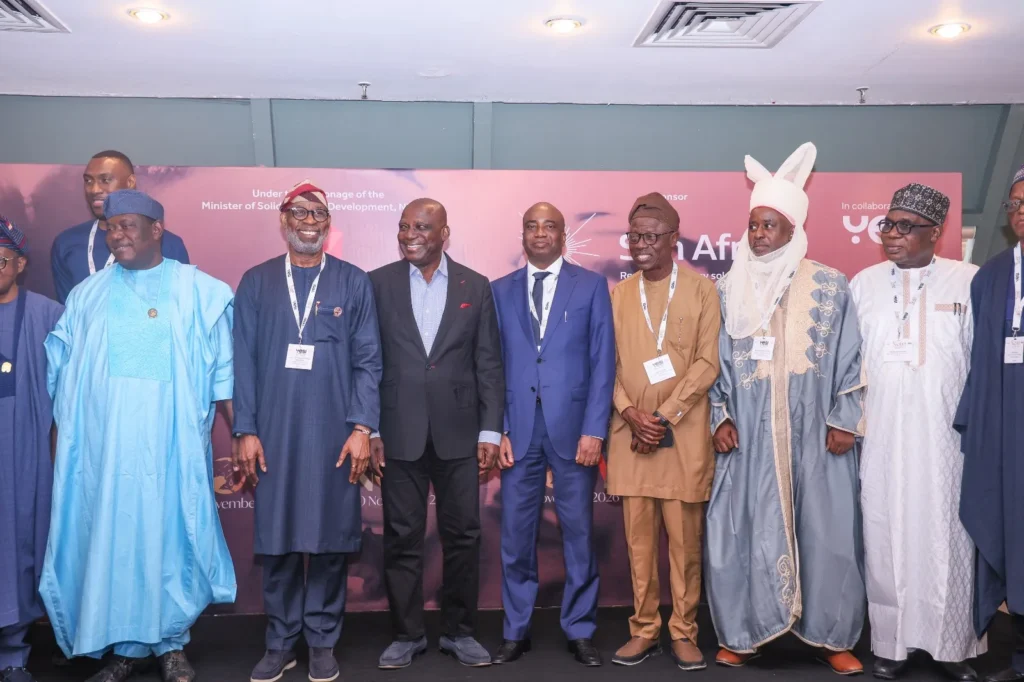
The Minister of Solid Minerals Development, Dele Alake, has identified inadequate mental development and poor civic attitudes as major obstacles to Nigeria’s progress, warning that investments in physical infrastructure alone cannot guarantee sustainable national development.
Alake said Nigeria must place equal emphasis on developing citizens’ attitudes, values and sense of responsibility while investing in roads, electricity, drainage systems and other public infrastructure.
The minister made the remarks on Thursday at the Nigeria Now event organised by the Youth Energy Summit (YES), where he stressed that the misuse of public facilities undermines the benefits of government investments.
He cited the indiscriminate disposal of refuse into drainage channels as an example of poor civic behaviour, noting that blocked waterways contribute to flooding, property destruction and loss of lives.
According to him, addressing Nigeria’s development challenges must begin with a change in citizens’ mindsets.
Alake also distinguished between literacy and genuine education, arguing that education should go beyond the ability to read and write to broaden people’s understanding, improve their judgement and encourage responsible citizenship.
He urged Nigerians to respect public regulations, protect government infrastructure and fulfil their civic obligations, stressing that physical development must be supported by corresponding improvements in human attitudes and behaviour.
Meanwhile, the Minister of Marine and Blue Economy, Adegboyega Oyetola, disclosed that revenue generated by agencies under his ministry rose from N700.79 billion in 2023 to N1.83 trillion in 2025.
Oyetola attributed the growth to improved revenue assurance, stronger institutional supervision and measures taken to block revenue leakages.
He also reported significant progress in maritime security, claiming that piracy had been eliminated from Nigerian waters.
The minister highlighted the lifting, in August 2026, of the United States Coast Guard’s condition of entry restriction on vessels arriving from Nigeria, attributing the development to sustained improvements in maritime security and regulatory compliance.
He identified investment opportunities across port operations, shipping, shipbuilding, vessel financing, inland waterways, fisheries, maritime tourism and logistics, urging private investors to collaborate with the government to unlock the sector’s economic potential.
Also speaking, President of the Nigerian Society of Miners, Umar Hassan, said the solid minerals sector contributed just 0.27 per cent to Nigeria’s Gross Domestic Product (GDP) in 2025, valued at approximately N1.68 trillion.
Hassan lamented that the country’s vast mineral resources remained largely untapped despite their availability across local government areas nationwide.
He called for increased investment in mineral exploration, extraction and local processing, arguing that Nigeria must move away from exporting raw minerals towards developing domestic industries capable of adding value to mineral resources.
He further identified opportunities in mineral testing, geological consultancy, equipment trading, welding, electrical works and mineral commodity trading.
Hassan encouraged young Nigerians to acquire relevant technical and professional skills to take advantage of emerging opportunities in the solid minerals industry.