Sokoto, UNICEF Urge Parents to Vaccinate Children Against Polio
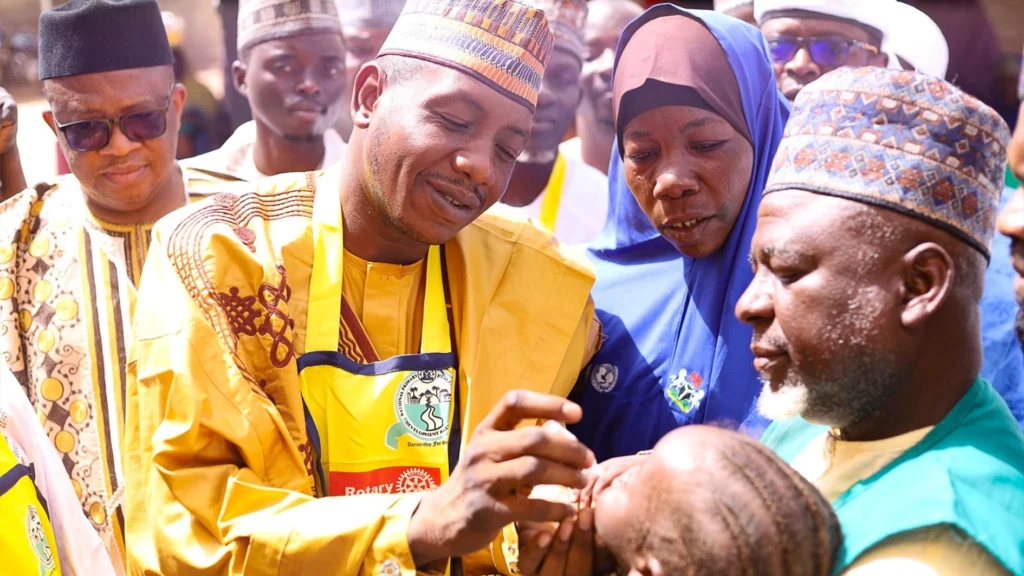
The Sokoto State Government and the United Nations Children’s Fund (UNICEF) have called on parents and caregivers to ensure that all children below five years receive polio vaccines during the forthcoming immunisation campaign scheduled for November 7 to 11.
The campaign is designed to reach children in underserved and hard-to-access communities, including internally displaced families, nomadic settlements and areas affected by insecurity.
UNICEF Head of Sokoto Field Office, Michael Juma, made the appeal on Friday at a media roundtable organised ahead of the exercise, urging journalists to intensify public awareness and counter misconceptions about vaccination.
Juma stressed that the media had a critical responsibility in encouraging parents to present their children for immunisation and promoting public understanding of the importance of polio eradication.
“The role of journalism or journalists is very important in capturing some of the happenings during the vaccination, but also influencing public opinion in terms of bringing children forward for vaccination,” he said.
He disclosed that UNICEF and its partners had undertaken various community engagement activities across Sokoto, Zamfara and Kebbi states to strengthen participation in the eradication campaign.
According to him, activities commemorating the 2026 World Polio Day, observed on October 24, included football competitions involving young people and journalists, alongside para-soccer events featuring polio survivors.
He said the initiatives were aimed at promoting inclusion, resilience and collective responsibility in the fight against polio.
Juma urged journalists to prioritise evidence-based reporting and draw attention to zero-dose children, those missed in previous vaccination rounds and children living in remote communities.
He also emphasised that supplementary vaccination campaigns were necessary to complement routine immunisation and strengthen protection against vaccine-preventable diseases.
“We are looking forward to seeing a Sokoto State where parents would open their doors, vaccination teams would reach the last household and every single child would be vaccinated by the end of this campaign,” he said.
Meanwhile, UNICEF Polio Coordinator in Nigeria, Asnakew Tsega, expressed concern over the continued transmission of poliovirus, revealing that between 68 and 69 children had suffered paralysis from two circulating poliovirus strains in 2026.
He said approximately 46 to 47 cases were associated with one strain, while another 21 cases were linked to the second strain.
Tsega explained that even one confirmed polio case was regarded as an outbreak because of the virus’s contagious nature and its capacity to cause permanent disability.
“Polio is a paralytic disease. It is very infectious, it paralyses children and affects everyone. But it is a disease with a solution because we can prevent it through vaccination,” he said.
He attributed the decline in reported paralysis cases largely to sustained vaccination efforts but warned that continued circulation of the virus made repeated immunisation essential.
The UNICEF coordinator urged parents to accept additional vaccine doses for children who had previously been immunised, explaining that every child below five years remained eligible for the November campaign.
“The solution is to vaccinate the children repeatedly because unless all the children have been reached repeatedly with the vaccines, the virus is going to continue and our children will be paralysed,” he said.
He noted that vaccination teams would conduct house-to-house visits and extend coverage to markets, schools, streets and other public places to ensure no eligible child was left behind.
Tsega added that the vaccines would be administered free of charge, despite the considerable financial commitments involved in procuring and delivering them.
On reaching communities affected by insecurity and displacement, Juma said the campaign had been designed to accommodate mobile populations, including families relocating from rural areas to urban centres.
He explained that pre-campaign mapping would assist vaccination teams in identifying nomadic and displaced households, while daily data reviews would help locate children missed during the exercise.
A vaccination official disclosed that special measures had been put in place to reach difficult and insecure communities, particularly in Isa, Gudu and Illela Local Government Areas.
The official said retired health workers and local health personnel would support vaccination teams, while traditional rulers, religious leaders, community gatekeepers and selected vigilante groups would assist in mobilising residents.
Security agencies were also involved in task forces coordinating the campaign across the state and local government areas.
Although insecurity remained a potential obstacle to reaching some settlements, the official expressed optimism that daily assessments would enable authorities to adjust their strategies and revisit communities where children had been missed.
The officials emphasised that the success of the campaign would require collaboration among the state government, UNICEF, the World Health Organisation, journalists, community leaders and other development partners.
They called on parents and caregivers to cooperate with vaccination teams, stressing that all children below five years must receive the vaccine irrespective of previous doses or their living circumstances.
Polio is a highly infectious viral disease that attacks the nervous system and can cause irreversible paralysis, particularly among children. Health authorities maintain that vaccination and repeated immunisation campaigns remain the most effective means of preventing the disease and closing immunity gaps.