
OPINION: Loans without clarity: Nigeria’s Ports Dilemma After Expired Concessions
By Dr. Saleh Ibrahim
Nigeria’s push to modernize its port infrastructure should have signaled a new era of economic confidence. Instead, it has exposed a deeper policy contradiction one that raises urgent questions about transparency, governance, and the credibility of public-private partnerships.
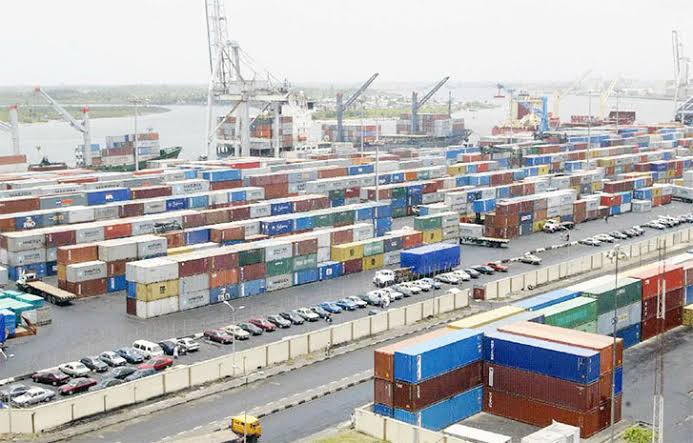
At the heart of the issue lies a troubling question of concession agreements for key Lagos ports, including Apapa and Tin Can Island, expired in 2022. Yet rather than resolving who should manage these critical assets through a transparent, competitive process, the Federal Government has proceeded to secure substantial external loans to fund their upgrade.
Last week in March 2026, Nigeria secured a £746 million, approximately $990 to $999 million, financing deal with the United Kingdom to modernize and redevelop the Apapa and Tin Can Island port complexes in Lagos. The facility, backed by UK Export Finance and arranged through a buyer credit structure involving Citibank, is expected to support infrastructure upgrades, improve efficiency, and drive the digitization of port operations.
The scale of the deal is significant. It represents the largest port upgrade in nearly five decades, targeting facilities that handle over 70 percent of Nigeria’s import and export cargo. The financing also includes substantial participation from British suppliers, reinforcing its bilateral commercial dimension.
But even as the ambition of the project is acknowledged, a fundamental question remains unanswered: who will operate these ports when the upgrades are complete?
In infrastructure governance, process is as important as outcome. Global best practice is clear. Once concessions lapse, assets of this scale should be subjected to open and competitive bidding. This approach drives efficiency, attracts fresh capital, and ensures value for money. It allows investors to bring financing, technology, and operational expertise, while government focuses on regulation and oversight. Nigeria appears to be reversing this logic.
By securing external financing before defining the post-concession framework, the government risks pre-determining outcomes that should ordinarily be market-driven. Instead of inviting investors to finance, build, and operate under transparent terms, the state is assuming financial responsibility upfront, without clarifying who will ultimately control operations.This approach is not just unconventional, it is deeply problematic.
First, it injects uncertainty into the investment climate. Potential investors, both local and international, are left guessing: will there be a fresh bidding process, an extension of existing operators, or new arrangements negotiated out of public view? In such an environment, serious investors are likely to stay away, wary of opaque and shifting rules.
Second, it raises concerns about efficiency and value for money. A central strength of concession models is risk transfer. The private sector invests its own capital and is incentivized to deliver performance. When government borrows instead, that discipline weakens. The financial burden returns to the public, while efficiency gains become far less certain.
Third, and perhaps most critically, it creates governance risks. Competitive bidding is not a bureaucratic formality. It is a safeguard against opacity and discretion. It ensures that decisions are based on merit, not negotiation behind closed doors. Securing loans before defining the operational framework inevitably invites questions about how final decisions will be made and in whose interest.The implications extend far beyond the ports.
Nigeria’s development strategy relies heavily on public private partnerships to bridge its vast infrastructure gap, from roads and rail to power and agriculture. But these partnerships function on trust. Trust in clear rules, transparent processes, and fair access to opportunity. If the handling of port concessions undermines that trust, the consequences will ripple across sectors.
For the administration of President Bola Ahmed Tinubu, this represents a critical test. The urgency to modernize aging port infrastructure and improve trade efficiency is understandable and necessary. But reforms are judged not only by intent, but by execution. And execution in this case raises difficult questions.
What should have happened, and what can still be done, is straightforward. With concessions expired, the government must first define a clear policy direction. Will the ports remain concessioned, revert to public management, or adopt a hybrid model? Once that decision is established, a transparent and competitive process should follow.
If concessions are to continue, they must be openly advertised, with credible investors invited to bid under clearly defined terms. Only then should financing be aligned with the chosen structure.
This sequence matters. It ensures that capital flows into a system that is already coherent, not one still under negotiation. It protects public interest by allowing competition to determine efficiency, cost, and value.
The current approach reverses that order, raising funds before defining structure, and in doing so creates more questions than answers.
Who will operate the upgraded ports?
Under what terms?
With what level of accountability?
And at what cost to the Nigerian public?
These are not abstract concerns. They go to the core of economic governance.
Nigeria’s ports are too vital to be managed within a framework of uncertainty. They are the gateways of trade, revenue, and global integration. Decisions about their future must therefore meet the highest standards of transparency and strategic clarity.
In the end, infrastructure is not just about cranes and concrete. It is about confidence. And confidence is not built by the size of loans secured, but by the integrity of the processes that guide their use.
Until those processes are made clear, Nigeria’s port modernization effort will remain overshadowed by a simple truth: a country cannot borrow its way into efficiency without first deciding who will deliver it.
Dr Saleh Ibrahim was a onetime Technical Adviser to the Minister of Transport.
Disclaimer: This is a sponsored opinion piece. The views expressed here do not necessarily reflect the editorial position of Gaskiya Cast.