OPINION: Billions Spent on Poverty Alleviation But Where Are the Results? Lessons from Kenya.
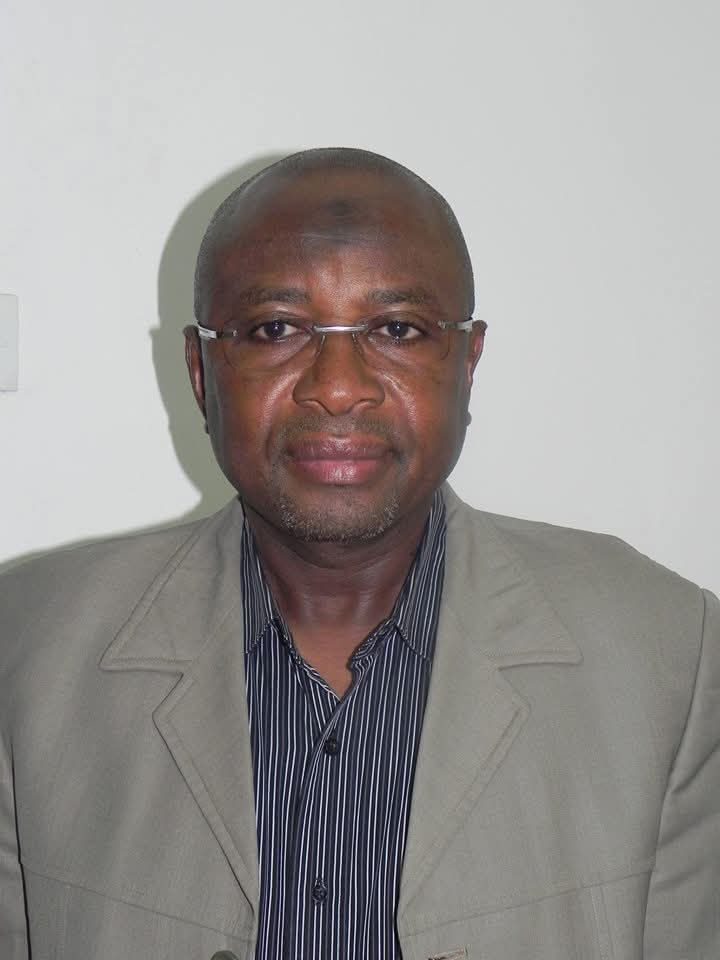
By Dr. Saleh Ibrahim
At its core, governance is not complicated. The responsibility of any government whether in Nigeria and elsewhere is to ensure that citizens can live with dignity. Get Food on the table, children in school, access to healthcare, reliable infrastructure, and opportunities to earn a living, these are the minimum standards.
According to the National Bureau of statistics, 133 million Nigerians fall within the multidimensional classification and the situation continues to deepen despite massive spending, some African countries facing similar constraints have recorded more visible progress. The comparison is not to suggest perfection elsewhere, but to highlight a critical truth. It is not just how much you spend, but how well you spend it.
The Minister of Finance in September this year disclosed that Nigeria spent 330 billion naira on Poverty Alleviation programmes in about two years. Yet the outcomes become difficult to see in the daily lives of citizens. Nigeria’s challenge is not the absence of programmes. In fact, there has been no shortage of interventions cash transfers, youth empowerment schemes, agricultural subsidies, and poverty alleviation initiatives.
Kenya, on the other hand, offers instructive examples of programmes where impact is more traceable and, importantly, more trusted. Take the Inua Jamii Programme, Kenya’s flagship social protection initiative. Designed to support the elderly, orphans, and vulnerable households, it operates on a relatively simple but effective principle: direct cash transfers with strong verification systems.
Beneficiaries are identified through community validation and national databases, and payments are made through secure, traceable channels.
The result is not just distribution but credibility. Beneficiaries know when payments are due. Leakages are reduced. The system, while not flawless, is trusted enough that citizens can point to it and say: this is working.
Contrast this with Nigeria, where many so-called beneficiaries of similar programmes remain invisible. Lists are often opaque. Payments are inconsistent. And in too many cases, citizens do not know who is receiving what or if the programmes even exist beyond official announcements.
Another critical difference lies in the use of technology.
Kenya has leveraged platforms like M-Pesa to transform how funds move within its economy. Social transfers, business payments, and even small-scale financial services are delivered digitally, reducing human interference and the opportunities for corruption that come with it.
In Nigeria, despite advances in digital banking, many intervention programmes still rely on fragmented systems vulnerable to manipulation. The absence of a fully transparent, technology-driven delivery mechanism allows corruption to thrive quietly within the system.
Agriculture offers another point of comparison.
Nigeria has launched multiple agricultural support schemes over the years, yet smallholder farmers still struggle with access to inputs, financing, and markets. Middlemen, inefficiencies, and poor targeting often dilute the impact of these interventions.
Kenya’s National Agricultural and Rural Inclusive Growth Project (NARIGP), supported by international partners, has focused on community-driven development. Farmers are organized into groups, funding is tied to clearly defined projects, and local accountability mechanisms ensure that resources are used as intended. Again, the difference is not in ambition but in execution and oversight.
What Kenya demonstrates, in practical terms, is that corruption is not inevitable. It can be reduced not eliminated, but significantly constrained through systems that prioritize transparency, traceability, and accountability.
Nigeria’s struggle, by contrast, lies in the persistence of structural leakages. Corruption in Nigeria does not always cancel programmes outright, it hollows them out. Funds are released, but not fully. Beneficiaries are listed, but not real. Projects are commissioned, but not completed. What remains is the illusion of action without the substance of impact.
This is why billions can be spent, yet poverty continues to rise. The implication for 2027 is profound. If Nigeria continues on its current path, increasing budgetary allocations alone will not change outcomes. Without systemic reforms, more money will simply flow through the same broken channels.
But if there is one lesson to draw from Kenya, it is this, effective governance is built on systems, not slogans.
Systems that identify real beneficiaries. Systems that deliver funds directly and transparently. Systems that can be independently verified. Systems where failure has consequences
These are not revolutionary ideas. They are practical steps that have already shown results in comparable environments.
As Nigerians prepare for the next electoral cycle, the conversation must shift. It is no longer enough for politicians to promise new programmes. The real question is whether they are willing to fix the systems that determine whether those programmes succeed or fail.
Because in the end, the difference between Nigeria and countries making modest progress is not destiny it is discipline.
Until Nigeria confronts the corruption that undermines its own initiatives, it will continue to spend billions fighting poverty while poverty quietly wins.
And so, the question becomes even sharper:
If others with similar challenges can make progress, why can’t Nigeria?
Dr. Saleh is the Chairman of Long-term Solution for Destitute Initiative
Disclaimer: This is a sponsored opinion piece. The views expressed here do not necessarily reflect the editorial position of Gaskiya Cast.